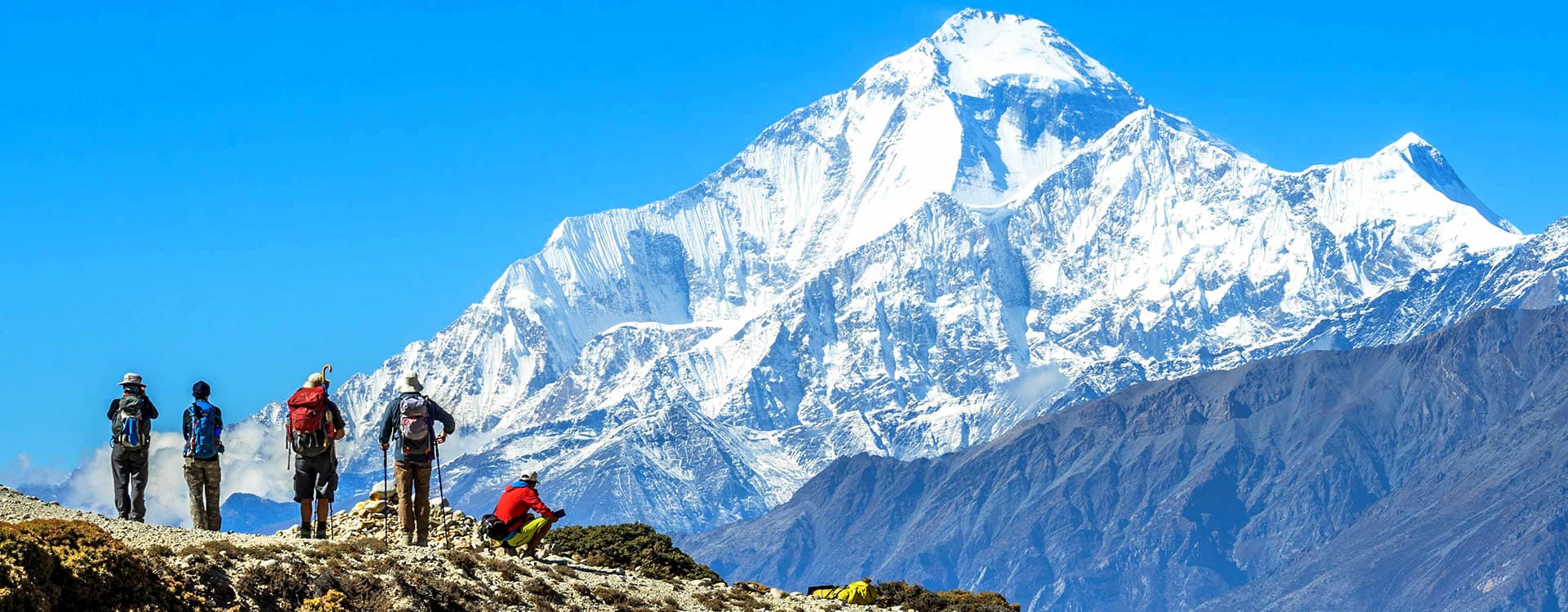
The Upper Mustang Trek is a mesmerizing journey into Nepal’s remote Himalayan desert, once the ancient Kingdom of Lo. This restricted-area trek takes adventurers through arid cliffs, Tibetan Buddhist villages, and the medieval walled city of Lo Manthang, offering a rare glimpse into preserved Tibetan culture. Trekkers traverse high passes like Chogo La (4,280m), explore centuries-old cave monasteries, and witness the vibrant Tiji Festival (if timed in May). With stunning views of Dhaulagiri and Nilgiri peaks, this 10-17 day trek requires special permits and is best undertaken in spring (March-May) or autumn (September-November). Ideal for those seeking adventure, culture, and solitude, the Upper Mustang Trek stands out as one of Nepal’s most unique and exclusive Himalayan experiences.
DestinationNepal
Duration17 Days
GradeModerate
ActivitiesTrekking
AccommodationHotel/ Lodge/ Guesthouse
Group SizeMin. 2 Pax
VehiclePrivate Vehicle/ Tourist Bus
MealsBreakfast, Lunch & Dinner
Highlights of Upper Mustang Trek
Explore the Forbidden Kingdom: Discover the ancient walled city of Lo Manthang, the former capital of the Kingdom of Lo, where time stands still amidst medieval Tibetan Buddhist culture, royal palaces, and centuries-old monasteries.
Dramatic Desert Landscapes: Trek through Nepal’s rain-shadow region, featuring barren cliffs, deep canyons, and wind-sculpted rock formations resembling the Tibetan Plateau.
Tiji Festival (Seasonal): If traveling in May, witness this vibrant three-day Buddhist festival celebrating the victory of good over evil, with masked dances and rituals unique to Mustang.
Ancient Cave Monasteries: Explore mysterious sky caves and cliffside Buddhist gompas, some dating back over 1,000 years, carved into the rugged mountains.
Kali Gandaki Gorge: Walk through the world’s deepest gorge, flanked by the towering Dhaulagiri (8,167m) and Nilgiri (7,061m) peaks.
Authentic Tibetan Culture: Experience preserved Tibetan traditions, from whitewashed stupas and prayer wheels to yak caravans and traditional thangka paintings.
Exclusive Restricted-Area Trek: With limited permits issued, this trek remains uncrowded, offering a peaceful alternative to busier routes like the Annapurna Circuit.
Unique Teahouse Experience: Stay in family-run lodges serving hearty local cuisine, blending Nepali and Tibetan flavors.
High-Altitude Adventure: Reach elevations up to 4,280m at Chogo La Pass, with panoramic views of the Annapurna and Dhaulagiri ranges.
Photographer’s Paradise: Capture surreal landscapes, colorful prayer flags, and the golden glow of sunset over the Himalayan desert.
Trip Overview
Upper Mustang Trek
The Upper Mustang Trek provides an enthralling trip through Nepal's secret Himalayan paradise where historic Tibetan culture coexists with magnificent desert scenes. Once the capital of the medieval Kingdom of Lo, Lo Manthang is reached through dramatic gorges, eroded cliffs, and traditional settlements untouched by time on this restricted-area walk. Along the Kali Gandaki River, as you cross the deepest canyon in the world, you will come across century-old monasteries, enigmatic cave homes, and colorful prayer flags flying against the background of snow-capped mountains such as Dhaulagiri and Nilgiri.
This trip provides excellent cultural immersion along with modest walking for explorers looking for off-the-beaten-path adventures. The best times for the Upper Mustang Trek are spring (March–May) and autumn (September–November), when clear skies expose amazing views of the Himalayan desert environment. This premium journey, unlike more busy ones like the Annapurna Circuit, calls for special permissions and provides a rare look into preserved Tibetan Buddhist customs, making it among Nepal's most distinctive and fulfilling high-altitude excursions.
Offering unrivaled knowledge and customized service in this confined Himalayan area, Nepal Adventure Holidays Pvt. Ltd. is the top trekking firm for your ideal Upper Mustang Trek. With over a decade of experience as a government-licensed trekking company, we focus on creating genuine Mustang adventures—from managing all permit arrangements (including the Upper Mustang Restricted Permit) to offering skilled local guides who bring the rich Tibetan Buddhist culture of the area alive. With cosy teahouse lodgings, safety-conscious itineraries, and distinctive cultural events in Lo Manthang, our thoughtfully created Upper Mustang Treks guarantee you find The Last Forbidden Kingdom in comfort and elegance. Our award-winning team offers the ultimate Mustang trip with round-the-clock support, eco-friendly policies, and reasonable costs, whether you are drawn to the Tiji Festival, historic cave monasteries, or the spectacular Kali Gandaki Valley, thus making us the top pick for hikers searching for this once-in-a-lifetime trip. Book with confidence; TAAN and the Nepal Tourism Board identify us as experts in high-altitude trekking!
Itinerary of Upper Mustang Trek - 17 days
Day 01
Day 1: Arrival in Kathmandu (1,400 m / 4,593 ft)
Activities: Meet at Tribhuvan International Airport. Transfer to the hotel in Thamel or similar.
Highlights: Explore Kathmandu’s bustling streets, temples (Swayambhunath, Boudhanath, Pashupatinath), and get your trekking permits issued (Annapurna Conservation Area & Restricted Area permits).
Accommodation: Hotel in Kathmandu.
Max. Elevation:1,400m
Day 02
Day 2: Drive from Kathmandu to Pokhara (850m / 2,696 ft)
Distance/Time: 200 km / 6–8 hours by tourist bus or private vehicle.
Activities: Scenic drive along the Trishuli River; views of terraced fields, local villages, and Himalayan foothills. Evening walk by Phewa Lake.
Accommodation: Hotel in Pokhara.
Max. Elevation:850m
Duration:6-7 Hours
Distance:200km
Day 03
Day 3: Flight Pokhara to Jomsom (2,720 m / 8,923 ft); Trek to Kagbeni (2,810 m / 9,219 ft)
Flight Time: 20–25 minutes.
Trek Time: ~3–4 hours / 11 km.
Route/Highlights: Fly over the Kali Gandaki Gorge with spectacular mountain views. Begin trek along the windy riverbed to Kagbeni — gateway to Upper Mustang.
Accommodation: Lodge/tea house in Kagbeni.
Max. Elevation:2,720m
Duration:25min
Day 04
Day 4: Kagbeni to Chele (3,055 m / 10,022 ft)
Trek Time: 5–6 hours / 12 km.
Route/Highlights: Follow the Kali Gandaki upstream, cross Tangbe village (whitewashed houses, apple orchards). Ascend to Chele through narrow canyons and ridges.
Accommodation: Tea house in Chele.
Max. Elevation:3,055 m
Duration:5-6 Hours
Distance:12km
Day 05
Day 5: Chele to Syanboche (3,930 m / 12,893 ft)
Trek Time: 6–7 hours / 11 km.
Route/Highlights: Cross Taklam La (3,624 m) and Darjori La (3,735 m). See cave dwellings and panoramic Himalayan views. Overnight at Syanboche or nearby Ghiling.
Accommodation: Tea house.
Max. Elevation:3,930 m
Duration:6-7 Hours
Distance:11km
Day 06
Day 6: Syanboche to Ghami (3,520 m / 11,548 ft)
Trek Time: 5–6 hours / 11 km.
Route/Highlights: Gradual ascent to Nyi La (4,010 m), descend to Ghami — a large village of whitewashed houses and chortens.
Accommodation: Tea house.
Max. Elevation:3,520m
Duration:5-6 Hours
Distance:11km
Day 07
Day 7: Ghami to Charang (3,560 m / 11,679 ft)
Trek Time: 4–5 hours / 9 km.
Route/Highlights: Cross one of Nepal’s longest mani walls, rolling terrain, red cliffs, and ancient prayer flags. Arrive at Charang with its dzong (fortress) and monastery.
Accommodation: Tea house.
Max. Elevation:3,560m
Duration:5-5 Hours
Distance:9km
Day 08
Day 8: Charang to Lo-Manthang (3,810 m / 12,500 ft)
Trek Time: 5–6 hours / 13 km.
Route/Highlights: Gradual climb to Lo La (3,950 m) with first views of Lo-Manthang — the walled capital of Upper Mustang. Explore narrow alleys and Tibetan-style houses.
Accommodation: Guesthouse in Lo-Manthang.
Max. Elevation:3,810m
Duration:5-6 Hours
Distance:13km
Day 09
Day 9: Explore Lo-Manthang (3,810 m / 12,500 ft)
Activities: Acclimatization and cultural exploration. Visit monasteries (Thubchen, Chode, Jampa), the royal palace, and nearby caves or villages such as Chhoser (optional jeep or horse ride).
Accommodation: Same guesthouse.
Max. Elevation:3,810m
Day 10
Day 10: Lo-Manthang to Yara (3,650 m / 11,975 ft)
Trek Time: 6–7 hours / 17 km.
Route/Highlights: Descend into the Kali Gandaki valley and climb gentle slopes to Yara, a remote village with ancient caves.
Accommodation: Tea house.
Max. Elevation:3,650m
Duration:6-7 Hours
Distance:17km
Day 11
Day 11: Yara to Tangge (3,340 m / 10,958 ft)
Trek Time: 6–7 hours / 16 km.
Route/Highlights: Cross desolate high desert landscape, river crossings, and scenic plateaus. Very few tea houses — a more rugged section of the trek.
Accommodation: Basic tea house.
Max. Elevation:3,340m
Duration:6-7 Hours
Distance:16km
Day 12
Day 12: Tangge to Chhusang (2,980 m / 9,776 ft)
Trek Time: 8–9 hours / 19 km (long day).
Route/Highlights: High ridges with sweeping Mustang views, gradual descent to Chhusang.
Accommodation: Tea house.
Max. Elevation:2,980m
Duration:8-9 Hours
Distance:19km
Day 13
Day 13: Chhusang to Muktinath (3,750 m / 12,303 ft)
Trek Time: 6–7 hours / 14 km.
Route/Highlights: Leave the Upper Mustang region, climb to Muktinath — a sacred pilgrimage site for Hindus and Buddhists. Visit the temple complex and the 108 water spouts.
Accommodation: Guesthouse.
Max. Elevation:3,750m
Duration:6-7 Hours
Distance:14km
Day 14
Day 14: Muktinath to Jomsom (2,720 m / 8,923 ft)
Trek Time: 5–6 hours / 17 km.
Route/Highlights: Downhill trek via Jharkot and Kagbeni back to Jomsom. Last evening celebration with the trekking crew.
Accommodation: Guesthouse.
Max. Elevation:2,720m
Duration:5-6 Hours
Distance:17km
Day 15
Day 15: Flight Jomsom to Pokhara (850 m / 2,696 ft)
Flight Time: 20–25 minutes.
Activities: Return to Pokhara, relax at lakeside cafés, or opt for optional sightseeing (World Peace Pagoda, Davis Falls).
Accommodation: Hotel in Pokhara.
Meals: Breakfast.
Max. Elevation:850m
Duration:25min
Day 16
Day 16: Drive Pokhara to Kathmandu (1,400 m / 4,593 ft)
Drive Time: 6–8 hours.
Activities: Scenic return to Kathmandu. Evening farewell dinner.
Accommodation: Hotel in Kathmandu.
Meals: Breakfast (dinner optional).
Max. Elevation:1,400m
Duration:6-8 Hours
Distance:200km
Day 17
Day 17: Final Departure
Activities: Transfer to Tribhuvan International Airport for your onward flight.
Meals: Breakfast (if flight time permits).
Max. Elevation:1,400m
If the provided schedule isn't suitable for you, we can create personalized travel arrangements.
Personal expenses (alcohol, snacks, Wi-Fi, hot showers)
Tips for guides/porters (recommended: $5–$10/day)
Meals in Kathmandu/Pokhara (except breakfast)
Optional helicopter return (available on request)
Price & Availability
Group size and price
2 Person
US$ 2200
3 - 6 Person
US$ 2100
7 - 10 Person
US$ 1950
Essential Information
Best Time for Upper Mustang Trek
The Upper Mustang Trek offers dramatically different experiences depending on when you visit, with each season presenting unique advantages and challenges. The optimal trekking seasons are spring (March to May) and autumn (September to November), when stable weather conditions prevail. During spring, temperatures range from 5°C to 20°C, making daytime hiking comfortable, while the landscape comes alive with wildflowers and the famous Tiji Festival (held in May) fills the ancient streets of Lo Manthang with vibrant masked dances. Autumn brings crisp, clear skies, perfect for unobstructed views of Dhaulagiri (8,167m) and the Nilgiri range, with daytime temperatures hovering around 10°C to 18°C. These seasons are ideal for photographers and cultural explorers, though they also attract more trekkers, so booking permits and flights to Jomsom in advance is essential.
For those seeking solitude, winter (December to February) offers a raw, crowd-free experience, but be prepared for sub-zero nights and possible snow on high passes like Chogo La (4,280m). While some teahouses close, the stark beauty of the Himalayan desert under winter skies is unparalleled. Conversely, the monsoon season (June to August) is not recommended due to heavy rains, which make trails slippery and increase landslide risks along the Kali Gandaki Valley. Flights to Jomsom are frequently delayed or canceled, and mountain views are often obscured by clouds. However, the lower valleys turn lush green, offering a rare glimpse of Mustang’s contrasting landscapes. Ultimately, the best time to trek depends on your priorities—optimal weather (spring/autumn), cultural immersion (spring), or adventurous solitude (winter)—while monsoon remains the only season to avoid.
Upper Mustang Trek Helicopter Return
For travelers seeking the magic of Upper Mustang without the long return trek, the Upper Mustang Trek with Helicopter Return offers the perfect blend of adventure and comfort. This exclusive itinerary allows you to experience the forbidden kingdom of Lo Manthang, ancient cave monasteries, and the dramatic Kali Gandaki Gorge on foot, while enjoying a scenic helicopter flight back from Lo Manthang to Pokhara. The helicopter return not only saves time (avoiding the 3-4 day return trek) but provides breathtaking aerial views of the Annapurna and Dhaulagiri ranges, making it ideal for those with limited time or who prefer a luxury trekking experience. With Nepal Adventure Holidays, you'll get a seamless journey including restricted area permits, expert local guides, and handpicked teahouse stays, ensuring comfort throughout this once-in-a-lifetime trip.
The best time for this trek is during spring (March-May) and autumn (September-November), when clear skies guarantee uninterrupted helicopter flights and optimal trekking conditions. The helicopter ride (approximately 1.5 hours) soars over the Himalayan desert, offering unparalleled views of Mustang’s unique landscapes that few get to witness from above. This premium trekking option is perfect for photographers, time-constrained travelers, or those who want to avoid strenuous return hikes. Prices vary based on group size and itinerary customization, but the helicopter return adds an unforgettable highlight to an already extraordinary journey. Book early, as permits and helicopter seats are limited during peak seasons!
Altitude during the Upper Mustang Trek
The Upper Mustang Trek takes trekkers through a high-altitude desert landscape, with elevations ranging from 2,800m (9,186ft) in Kagbeni to 4,280m (14,042ft) at Chogo La Pass. Most of the trek unfolds between 3,000m–3,800m, including the iconic Lo Manthang (3,810m), requiring careful acclimatization to avoid altitude sickness. Unlike other Himalayan treks, Mustang’s rain-shadow location means thinner air but drier conditions, which can both help and challenge acclimatization. Key stops like Chele (3,050m) and Geling (3,570m) are strategically spaced to allow gradual adaptation, but trekkers should still monitor for symptoms like headaches or nausea and drink plenty of water.
The highest point, Chogo La Pass (4,280m), demands extra caution, as oxygen levels here are 40% lower than at sea level. Descending afterward to Dhakmar (3,800m) helps reduce risks. While not as extreme as Everest Base Camp, the cumulative altitude exposure over 10+ days makes proper pacing essential. Nepal Adventure Holidays designs itineraries with built-in acclimatization days and trained guides to ensure safety. For those prone to altitude issues, Diamox (acetazolamide) can be helpful, but consulting a doctor pre-trek is advised. Remember: slow ascent, hydration, and listening to your body are the golden rules for enjoying Mustang’s surreal landscapes safely.
Permits for the Upper Mustang Trek
The Upper Mustang Trek requires two essential permits due to its status as a restricted area near the Tibetan border. The Upper Mustang Restricted Area Permit (RAP) costs $500 for 10 days (with additional days at $50/day) and must be obtained through a licensed trekking agency, as independent travelers cannot apply. Alongside this, all trekkers need an Annapurna Conservation Area Permit (ACAP) ($25 for foreigners), which helps preserve the region's unique ecosystem. These permits are checked at key checkpoints like Kagbeni and Lo Manthang, so carrying your original passport and permit copies is mandatory.
Unlike other treks in Nepal, the Upper Mustang route does not require a TIMS card, simplifying the paperwork slightly. However, planning is crucial—permits take time to process, especially during peak seasons (spring and autumn). Reputable agencies like Nepal Adventure Holidays handle all permit arrangements, ensuring a smooth start to your journey. Remember, the RAP's 10-day limit dictates your itinerary, so work with your agency to design a trek that fits within this timeframe while allowing proper acclimatization and exploration of Mustang's ancient wonders.
Preparation for the Upper Mustang Trek
Proper preparation for the Upper Mustang Trek is crucial to ensure a safe and enjoyable journey through Nepal's high-altitude desert. Start by packing smart—bring layered clothing for fluctuating temperatures (from 0°C to 25°C), including a down jacket, thermal wear, and a windproof shell. Sturdy, broken-in hiking boots are a must for rugged terrain, along with sunglasses, a wide-brimmed hat, and high-SPF sunscreen to combat intense UV rays at elevation. Don’t forget a reusable water bottle (with purification tablets) and a basic first-aid kit with altitude sickness medication. Since the trek passes through remote areas, carry cash (NPR) for teahouses and souvenirs, as ATMs are unavailable beyond Pokhara.
Physical and mental pre-trek training is equally important. The Upper Mustang Trek involves 5–7 hours of daily hiking over rocky trails and high passes like Chogo La (4,280m). Build endurance with cardio exercises (hiking, cycling) and leg-strengthening workouts 2–3 months prior. Acclimatization is key—choose an itinerary with gradual altitude gain and consider consulting a doctor about Diamox for altitude prevention. Lastly, book with a reputable agency (like Nepal Adventure Holidays) to handle permits, guides, and logistics, ensuring a seamless experience in this restricted Himalayan region.
Transportation and Flights on Upper Mustang Trek
The Upper Mustang Trek begins with a scenic 6-7 hour drive from Kathmandu to Pokhara, offering glimpses of Nepal's lush hills and rivers. From Pokhara, most trekkers take a 20-minute flight to Jomsom (2,720m) – a thrilling journey with close-up views of Annapurna and Dhaulagiri peaks. These Jomsom flights operate daily in spring (March-May) and autumn (September-November), but are weather-dependent and may face delays due to strong winds in the Kali Gandaki Valley. For those preferring ground transport, a rugged jeep ride from Pokhara to Jomsom (8-10 hours) is possible, but the bumpy road makes flying the preferred option.
After completing the trek in Lo Manthang, travelers can either retrace their steps to Jomsom (a 2-3 day trek) or opt for a breathtaking helicopter return to Pokhara (1.5 hours), which saves time and offers aerial views of Mustang's desert landscapes. Nepal Adventure Holidays arranges all transport logistics, including domestic flights, private jeeps, and helicopter charters, ensuring a smooth journey. Remember: flight cancellations are common in monsoon (June-August), so spring/autumn trips are more reliable. Whether by air or road, the journey to Mustang is an adventure in itself!
Safety on Upper Mustang Trek
The Upper Mustang Trek is generally considered safer than other high-altitude treks in Nepal, but proper precautions are still vital. The greatest risks come from altitude sickness (especially at Chogo La Pass, 4,280m) and remote terrain. To stay safe, choose an itinerary with proper acclimatization days, drink 3-4 liters of water daily, and recognize symptoms like headaches or nausea. Reputable operators like Nepal Adventure Holidays provide experienced guides trained in wilderness first aid and oxygen cylinders for emergencies. The trail itself is well-defined but has exposed sections – sturdy hiking boots and trekking poles help prevent slips on loose scree.
Other key safety considerations include weather awareness (afternoon winds can be strong) and cash preparedness (no ATMs beyond Pokhara). While the region is politically stable, travel with copies of your permits and passport for checkpoints. Teahouses offer basic but safe lodging, though bringing a sleeping bag liner adds hygiene protection. For ultimate security, travel insurance covering helicopter evacuation (up to 4,500m) is mandatory. With these precautions, you can confidently explore Mustang's ancient monasteries and dramatic landscapes while minimizing risks.
Trip Extensions on Upper Mustang Trek
After completing the Upper Mustang Trek, consider extending your journey to explore more of Nepal's iconic destinations. A popular option is adding the Annapurna Base Camp Trek (5-7 days), which takes you through lush rhododendron forests to the foot of Annapurna I (8,091m). Alternatively, experience Nepal's wildlife with a Chitwan National Park extension (3 days), where you can spot Bengal tigers, one-horned rhinos, and Gharial crocodiles on jungle safaris. For cultural immersion, visit Lumbini (Buddha's birthplace) or relax in Pokhara with paragliding over Phewa Lake. These extensions work perfectly with helicopter returns from Mustang, saving time for extra adventures.
For those seeking deeper Himalayan exploration, combine your trek with the Manaslu Circuit (challenging) or the Ghorepani Poon Hill Trek (moderate). Nepal Adventure Holidays customizes seamless trip extensions with private transport, guided tours, and luxury lodge stays. Whether you want more mountains, wildlife encounters, or cultural discoveries, extending your Mustang adventure lets you experience Nepal's incredible diversity. Just remember to adjust your visa duration if needed – most extensions add 5-10 days to your itinerary.
Tipping for Upper Mustang Trek
Tipping is an important cultural practice on the Upper Mustang Trek, as it directly supports your guide, porter, and support staff who work hard to make your journey successful. For trekking guides, a tip of $15-$25 per day (per group) is customary, while porters typically receive $10-$15 per day. If you're traveling with an assistant guide or cook, consider $8-$12 per day for each. These amounts can be adjusted based on group size, service quality, and trek difficulty, especially for challenging sections like Chogo La Pass (4,280m). Tips are usually given at the end of the trek in Nepalese rupees (NPR) or USD, preferably in an envelope as a gesture of gratitude.
Since the Upper Mustang Trek operates in remote areas, carrying small denomination NPR notes (100-500 NPR) is helpful for additional tips to teahouse staff or local helpers. Some trekkers also leave unused gear or clothing as a kind alternative. Nepal Adventure Holidays recommends discussing tipping expectations with your guide early on to avoid confusion. Remember, while tipping isn’t mandatory, it’s a meaningful way to acknowledge the team’s effort in making your Himalayan adventure safe and memorable.
The Upper Mustang Trek is a trip through time into Nepal's last forbidden kingdom, where Tibetan Buddhist culture flourishes amid dramatic desert landscapes, not just a hike. From the ancient walled city of Lo Manthang to the high Chogo La Pass (4,280m), every stride exposes unsurpassed Himalayan splendor and strong cultural history. This journey combines adventure and cultural immersion with special permits, pleasant teahouse stays, and experienced local guides. Whether you are drawn by the Tiji Festival, the secret cave monasteries, or the thrill of remote Himalayan rain shadow trekking, the Upper Mustang Trek offers an adventure unlike any other in Nepal. For the finest weather, plan carefully—choose spring or autumn; get ready for high-altitude conditions; and reserve with a respectable agency for flawless logistics. Ready to discover this secret jewel? The Kingdom of Lo is waiting!
Upper Mustang Trek FAQs
Q: Where is Upper Mustang located?
A: Upper Mustang is located in the northwestern region of Nepal, near the border with Tibet. It was once a separate kingdom and is often referred to as the "Last Forbidden Kingdom" due to its historical isolation. The area is culturally Tibetan and features a striking trans-Himalayan landscape of barren cliffs, caves, and ancient monasteries.
Q: Do I need a special permit to trek in Upper Mustang?
A: Yes, Upper Mustang is a restricted region and requires special trekking permits. You will need a Restricted Area Permit (RAP), which costs USD 500 per person for the first 10 days, and an additional USD 50 per day beyond that. Additionally, you must obtain the Annapurna Conservation Area Permit (ACAP), which costs around USD 25. Independent trekking is not allowed; you must be accompanied by a registered guide through a licensed trekking agency.
Q: What is the best time to go on the Upper Mustang trek?
A: The best times for the Upper Mustang trek are during the spring season (April to early June) and autumn (late September to November). These months offer clear skies and stable weather. Because Upper Mustang lies in a rain shadow region, it is also one of the few treks in Nepal that can be done during the monsoon season, from June to August.
Q: How difficult is the Upper Mustang trek?
A: The Upper Mustang trek is considered moderately difficult. It does not involve technical climbing, but you will be walking for 5 to 8 hours each day at altitudes that reach over 4,000 meters. A basic level of fitness is required, and while previous trekking experience is helpful, it is not essential for someone who is physically prepared and acclimatized.
Q: What kind of accommodation can I expect during the trek?
A: Accommodation on the trek is primarily in local teahouses or lodges. These are simple, family-run guesthouses that offer basic rooms, usually with twin beds and shared bathrooms. In some villages, hot showers and limited Wi-Fi may be available for an extra charge.
Q: What type of food is available during the trek?
A: Teahouses offer a variety of meals, including traditional Nepali dal bhat (rice, lentil soup, and vegetable curry), Tibetan dishes like thukpa and momos, as well as Western items such as pasta, eggs, and pancakes. It's advisable to avoid uncooked food and always drink purified or bottled water to stay healthy.
Q: Is altitude sickness a concern on this trek?
A: Yes, altitude sickness can be a concern, particularly as you ascend above 3,000 meters. While the itinerary usually allows for gradual acclimatization, trekkers should be aware of symptoms such as headaches, dizziness, and nausea. Drinking plenty of water, ascending slowly, and taking acclimatization days are important precautions. It is wise to consult a doctor before the trip and consider carrying altitude medication like Diamox if needed.
Q: How do I get to the starting point of the trek?
A: To reach the starting point of the trek, you will first travel from Kathmandu to Pokhara by either road or air. From Pokhara, you take a short domestic flight to Jomsom, which serves as the gateway to the Mustang region. The actual trek begins from Kagbeni, a short walk from Jomsom.
Q: Is there a mobile network or internet access in Upper Mustang?
A: Mobile network coverage is limited in Upper Mustang. Some villages have weak signals from NTC or NCell, but they can be unreliable. A few teahouses in larger settlements like Lo Manthang offer Wi-Fi, usually for a fee. Electricity is available in most villages, but it’s advisable to carry a power bank or solar charger.
Q: What is the approximate cost of the Upper Mustang trek?
A: The cost of the trek typically ranges between USD 2,000 and USD 3,500 per person. The price depends on the duration of the trek, group size, level of service, whether domestic flights are included, and what kind of accommodation and meals are provided. This cost generally covers permits, guide and porter fees, transportation, accommodation, and food.
Q: What makes Upper Mustang different from other treks in Nepal?
A: Upper Mustang is unique because of its remote location, Tibetan-style culture, and stark desert landscapes. Unlike other regions of Nepal that are lush and green, Upper Mustang is dry, with dramatic rock formations and ancient cave dwellings. The walled city of Lo Manthang, the Tiji Festival, and centuries-old monasteries give it a mystical and historical charm that sets it apart from more popular trekking routes.
Q: Are medical facilities available during the trek?
A: Medical facilities in Upper Mustang are extremely limited. Basic first aid is available at some lodges, but serious issues require evacuation to Pokhara or Kathmandu. For this reason, it is essential to have travel insurance that covers high-altitude trekking and emergency helicopter evacuation.
This tour covers a lot in one day, so be prepared for some walking! The guide was patient and answered all our questions. The only minor issue was the midday heat, but the company provided water, which helped. Overall, a great way to see Kathmandu’s UNESCO treasures in a short time.
SSophie D4th Apr, 2025
A Perfect Blend of Culture & Nature
The Manaslu Circuit Trek was a perfect mix of stunning Himalayan scenery and rich cultural experiences. Our guide, Mingma, shared fascinating insights about the local villages and Tibetan Buddhist traditions. Nepal Adventure Holidays took care of every detail, making the trip seamless. Highly recommended!
JJames26th Mar, 2025
Best Trekking Company in Nepal!
From the moment we booked, the team at Nepal Adventure Holidays was professional and attentive. The Manaslu trek was challenging but rewarding, with diverse landscapes from lush forests to high-altitude passes. The porters were friendly, and the food was surprisingly good. Will trek with them again!
.4828dc85.png&w=256&q=75&dpl=dpl_4wpSjHUy1BcszSUAUcwRxno9aXXy "Affiliation 1")
.a14f8e77.png&w=256&q=75&dpl=dpl_4wpSjHUy1BcszSUAUcwRxno9aXXy "Affiliation 2")
.7a169c70.png&w=256&q=75&dpl=dpl_4wpSjHUy1BcszSUAUcwRxno9aXXy "Affiliation 3")
.360ce5ac.png&w=96&q=75&dpl=dpl_4wpSjHUy1BcszSUAUcwRxno9aXXy "Affiliation 4")
.b0c53703.png&w=384&q=75&dpl=dpl_4wpSjHUy1BcszSUAUcwRxno9aXXy "Affiliation 5")
.f0df82a6.png&w=420&q=75&dpl=dpl_4wpSjHUy1BcszSUAUcwRxno9aXXy "Affiliation 6")
.06f9557e.png&w=384&q=75&dpl=dpl_4wpSjHUy1BcszSUAUcwRxno9aXXy "Affiliation 7")