The Gokyo Lake Trek stands out as one of Nepal's most rewarding and visually spectacular journeys, offering the perfect balance of challenging high-altitude trekking, cultural immersion, and unparalleled mountain scenery. Unlike the busier Everest Base Camp route, this trek takes you through the serene Gokyo Valley, where pristine turquoise lakes, the towering Gokyo Ri viewpoint (5,357m), and the massive Ngozumpa Glacier create a Himalayan paradise for trekkers and photographers alike. With fewer crowds, a well-paced itinerary, and comfortable teahouse accommodations, it's an ideal choice for those seeking an authentic adventure without sacrificing accessibility.
Whether the sacred Gokyo Lakes draw you, the 360-degree panoramas from Gokyo Ri, or the chance to experience Sherpa hospitality in traditional villages, this trek delivers an unforgettable high-altitude experience. The combination of natural beauty, cultural richness, and achievable challenge makes it a must-do Himalayan trek for both first-time visitors and seasoned adventurers. With proper acclimatization, physical preparation, and a reputable guide, the Gokyo Lake Trek promises not just a journey through the mountains but a transformational adventure that will leave you in awe of Nepal's majestic landscapes.
DestinationNepal
Duration13 Days
GradeModerate
ActivitiesTrekking
AccommodationHotel/ Lodge/ Guesthouse
Group SizeMin. 1 Pax
VehiclePrivate Vehicle/ Tourist Bus
MealsBreakfast, Lunch & Dinner
Highlights of Gokyo Lake Trek
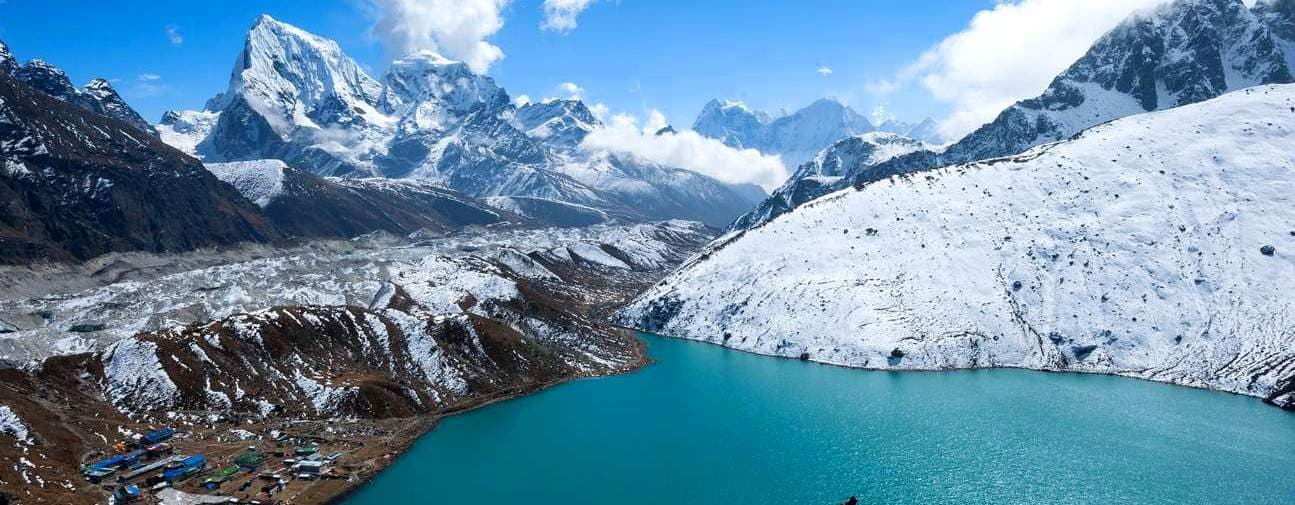
Gokyo Lakes: Explore the six sacred, turquoise-blue glacial lakes considered holy by both Hindus and Buddhists. The chain includes the main Third Lake (Dudh Pokhari) beside Gokyo village, and the more distant Fourth (Thonak Tsho) and Fifth (Gyazumpa Tsho) lakes.
Gokyo Ri (5,357 m): A challenging but incredibly rewarding sunrise hike to a summit that offers a 360-degree panorama of four of the world's highest peaks: Mount Everest, Lhotse, Makalu, and Cho Oyu.
Ngozumpa Glacier: Walk alongside the longest glacier in the Himalayas (36 km), a truly humbling sight of vast, rubble-covered ice stretching toward Tibet.
Sherpa Culture: Immerse yourself in the rich culture of the Sherpa people as you pass through towns like Namche Bazaar, Dole, and Machhermo. The route is dotted with ancient monasteries, prayer flags, and mani walls.
Scenic Flight & Suspension Bridges: Your adventure begins with a thrilling flight to Lukla, one of the world's most exciting airports. The trek then continues across several high-suspension bridges over the cascading Dudh Koshi River.
UNESCO World Heritage Site: Trek through the Sagarmatha National Park, a UNESCO World Heritage Site teeming with diverse flora and fauna, including the vibrant rhododendron forests in spring.
Trip Overview
Gokyo Lake Trek
The Gokyo Lake Trek is, no doubt, the most beautiful lake trek in Nepal. It is also known as the Thonak Lake. If you have been to Everest Base Camp and want something different, or if you are choosing your first Khumbu trek and want an experience that feels genuinely off the main track, this Trek is for you.
From this point the ascent is to Dole (4110m), Machhermo (4470m) and the village of Gokyo (4790m) which marks the high point of this trek where, we start out before day break to reach the summit of Gokyo Ri (5357m). This leaves 10 days to actually trek, starting with a 35 minute flight from Kathmandu to Lukla (2,860 m) and following the Dudh Kosi valley north to Phakding and Namche Bazaar before taking a westerly turn to the Gokyo valley.
From here you go through Dole (4,110 m), Machhermo (4,470 m) and finally Gokyo village (4,790 m) where you get the peak of the trek, getting up before sunrise for the ascent to Gokyo Ri (5,357 m). This rocky outcrop allows 360 degree views of all four 8,000 m peaks that dominate this region; Everest, Cho Oyu, Lhotse and Makalu. It is higher than Everest basecamp itself. After taking in the magnificent view, you will make the journey back along the same trail.
Unlike the Everest Base Camp Trek, the difference in the Gokyo Lake trek is not just the route but the character of the landscape; the 5 Gokyo Lakes are quite simply some of the most spectacular bodies of water in Nepal. Dudh Pokhari, the third lake at 4,700 m, is more than 1 km long, with the placid waters creating reflections that are captured by photography far less convincingly than by simply observing them first hand.
The 36 km long Ngozumpa Glacier, Nepal's longest and the longest in the Himalayas (outside the polar region) skirts the eastern edge of the lakes and it is possible to watch melt streams carving themselves out of the ice and moraine in real time as you walk alongside. From Machhermo on you really do feel removed from the world, with far fewer people, smaller tea houses and long stretches of empty terrain populated only by the wind, peaks and your own footsteps.
The cultural element of this trek is every bit as special as the landscape. The trek takes you past traditional Sherpa villages such as Khumjung (a beautifully preserved traditional high-altitude village), and into the commercial heartland of the region at Namche Bazaar. All the trekking takes place within Sagarmatha National Park, a World Heritage site which not only covers the mountain landscapes but also preserves the life and culture of the Sherpa people.
Throughout your trek you will pass many mani walls covered in Buddhist script, stupas, chortens at difficult junctions and in prominent places, and prayer flags flapping away above you, some having been up there for decades. An experienced Sherpa guide really brings this culture to life in a way that simply does not happen when you trek independently.
The best times to do this trek are Spring (March to May) and Autumn (September to November). Rhododendrons will be blooming low down in Spring and temperatures are likely to be milder, whereas the skies will be at their clearest during the Autumn. The trekking is rated as moderately difficult; it's not a technically demanding trek but it should be taken very seriously and acclimatisation carefully monitored.
Our team has been running this route for years with small groups and experienced Sherpa guides. Book your Gokyo Lake Trek with us and walk it properly.
Itinerary of Gokyo Lake Trek - 13 days
Day 01
Day 01: Arrival in Kathmandu (1,400 m)
Your Gokyo Lakes trek kicks off as soon as you touch down at Tribhuvan International Airport (TIA) in Kathmandu. We will be there to receive you in the arrivals lounge and will transport you by private vehicle to your hotel in Thamel-Kathmandu's vibrant trekking hub. Enjoy the rest of the day to settle in, overcome travel fatigue and get familiar with the surroundings. Later in the afternoon or in the evening, you'll meet your main trekking guide for the briefing-a pragmatic and informal presentation outlining the 13-day trekking itinerary, daily distance and altitudinal gains, acclimatization strategy, trekking permit details, and how to pack your daily versus porter carried items. In Thamel, there are shops where you can buy any last minute gear, pharmacies, money exchange booths/ATMs and great eating places easily accessible by walking distance from almost every hotel. Make any final preparations, buy or rent trekking gears, have dinner and plan for an early night since you need to catch an early flight in the morning.
Max. Elevation:1,400 m
Day 02
Day 02: Fly Kathmandu to Lukla (2,860 m), Trek to Phakding (2,610 m) — 35 min flight + 3 hours trek
A nice early start then. A thirty minute taxi ride to Kathmandu's domestic terminal, then thirty five minutes by plane to Lukla - an experience many a trekker will reminisce on for many years. Planes flown by Tara or Summit air weaving and bobbing between ridgelines, then dropping steeply onto the relatively short, steeply up-hill runway of Tenzing-Hillary airport - utterly thrilling, and an utterly beautiful perspective of the foothills. On the ground in Lukla it’s a matter of finding bags, being introduced to the porter team, then striding out of town onto the trail heading north. Down the gently sloping pine and rhododendron forests, following the Dudh Kosi river through the villages of Cheplung and Ghat, you reach Phakding after a three hour walk. The relatively flat three hours will gently, yet surely, introduce the body to the pace without stressing the muscles before the steeper inclines begin.
Max. Elevation:2,860 m
Duration:35min
Day 03
Day 03: Trek Phakding to Namche Bazaar (3,440 m) — 6 hours trek
This is the day that the Khumbu truly begins. After Phakding, the trail goes north, traversing a series of suspension bridges above the Dudh Kosi; the Hillary bridge is the most memorable and the first point that trekkers often glimpse Mount Everest soaring high above the ridges ahead in a quick burst of adrenaline. You will enter Sagarmatha National Park at Monjo and show your trekking permits to the rangers on duty, and climb for the final 600m through thick forest up to Namche Bazaar. This climb is often noticeable, but Namche compensates every step; a semi-circular village cascading down the side of a natural bowl and filled with colourful lodges, bakeries, equipment shops, teahouses and many bars is strung out at 3,440m. 10-11km; 6 hours, the day is more or less the entire ascent and downhill portion of the day. Namche Bazaar is the business and cultural centre of the Khumbu and the most well-stocked town until you reach it again after the trip.
Max. Elevation:3,440 m
Duration:5-6 Hours
Distance:11km
Day 04
Day 04: Acclimatization Day — Khumjung Village and Everest View Hotel (3,880 m) — 2 to 3 hours trek
Your acclimatization days are not rest days; it's a crucial aspect of the established method 'climb high, sleep low'. The premise is to go higher during the day and back down to sleep at your original altitude - forcing your body to produce more red blood cells without inducing altitude sickness. Today's acclimatization walk will take you up through Namche to Khumjung village (3790m). It is a traditional Sherpa village, where one of the earliest schools was built by Sir Edmund Hillary after his ascent of Everest in 1953 and where one of the earliest preserved yeti scalp was on display in the village monastery until quite recently. Your walk continues on to the Everest View Hotel (3880m) which provides un-impeded views of Everest, Lhotse, Nuptse, Ama Dablam and Thamserku. The full round trip takes 2-3 hours. Back in Namche, the rest of the day is yours to recover, rest and visit the Sherpa Culture Museum or National Park Visitor Centre.
Max. Elevation:3,440 m
Day 05
Day 05: Trek Namche Bazaar to Dole (4,110 m) — 6 to 7 hours trek
The Gokyo Lake Trek separates from the Everest Base Camp trek today, heading into a different valley. From Namche the trail ascends through Khumjung, then it traverses to the west of the Dudh Koshi and continues in a north-west direction up the Gokyo valley. Past the tree line it is a rolling, treeless landscape with extensive views ahead – Cho Oyu in the north and Kantega and Thamserku in the east. The trail winds through tiny villages of Mong La and Phortse Thanga until the last ascent of Dole is undertaken. At 4110 m, Dole is a cluster of lodges in high pasture and yaks come down for the afternoons with a considerable temperature drop after dark. A walk of 13-15 km over 6-7 hours. Ensure adequate water intake and monitor the body's response to the altitude change.
Max. Elevation:4,110 m
Duration:5-6 Hours
Distance:5.7km
Day 06
Day 06: Trek Dole to Machhermo (4,470 m) — 6 to 7 hours trek
Continuing northwest from Dole, the path leads you through the villages of Lhabarma (4330 m) and Luza (4370 m). From Dole to Luza the terrain rises steadily with a feeling of increased isolation in a narrowing valley. Beyond Luza, the path opens up onto a large glacial valley with impressive surrounding mountains: Cho Oyu on the northern horizon, the Gokyo ridgeline on the western, and in the distance on the west you can see the Renjo La. The sheer scale of the mountains around makes the walk of the day far more majestic than can be readily conveyed to you before you get there. Machhermo lies at 4470 m, at the open bottom of a large valley, and looks like an even smaller cluster of lodges that usually sees far more yaks than trekkers on any given day. The Himalayan Rescue Association (HRA) health post at Machhermo is normally staffed with doctors during trekking season, a stop well worthwhile for a review of altitude sickness symptoms and prevention, prior to tomorrow's climb to 4790 m. This day's trek from Dole takes 6 to 7 hours.
Max. Elevation:4,470 m
Duration:5-6 Hours
Distance:7.2km
Day 07
Day 07: Trek Machhermo to Gokyo Lake (4,790 m) — 4 to 5 hours trek
The most satisfying day of the approach and the one most people seem to recall most fondly. The route leads from Machhermo, passing Longponga Tsho (4,690 m - the first Gokyo Lake) and Taboche Tsho (4,700 m - the second); the color of the lakes is spectacular, and completely surreal, a bright, luminous turquoise that alters hue in the daylight and, again, is something most trekkers will never have witnessed before. It leads on to Dudh Pokhari (4,700 m), the third and main lake, and to Gokyo village, sited on the north bank of the lake (4,790 m). The views are dominated by the majestic summit of Cho Oyu (8,188 m), sitting directly to the north, and are the most imposing available on any part of the trek. The walk is between 4 and 5 hours long from Machhermo. Get an early night; tomorrow is summit day.
Max. Elevation:4,790 m
Duration:5-6 Hours
Distance:7km
Day 08
Day 08: Sunrise Excursion to Gokyo Ri (5,357 m) and 5th Lake — 6 to 7 hours trek
The wake up call for Gokyo Ri is anywhere between 4 am and 4:30 am. When you leave the teahouse for the climb, ensure you are wearing every piece of warm clothing you have for the pre-dawn temperatures are below zero at Gokyo. Gokyo Ri takes 2-3 hours to ascend, a steep, rock-strewn climb with no technical challenges but, with the altitude, every step is a deliberate slow one. At the summit the reward: Everest (8,848 m), Lhotse (8,516 m), Makalu (8,463 m) and Cho Oyu (8,188 m) are all laid out before you at the same time, together with the 36 km sweep of the Ngozumpa glacier to the south. This is without doubt one of the finest non-technical summit viewpoints in the Himalayas, with experienced Himalayan trekkers placing it among the very best. After as long as you wish at the summit, return to Gokyo village and have a late breakfast. In the afternoon, following the trail north past the fourth lake (Thonak Tsho, 4,900 m) to the fifth lake (Ngozumpa Tsho, 4,990 m), the furthest and highest lake on the expedition, then it is back to Gokyo to stay. This should take 6-7 hours walking.
Max. Elevation:5,357 m
Duration:4-5 Hours
Distance:3.4km
Day 09
Day 09: Trek Gokyo Lake to Dole (4,038 m) — 5 to 6 hours trek
The descent trip will then start from Gokyo village and back south down the valley. We then walk down to the lake and continue in the same way but everything looks different from the other direction as angles change, afternoon sun is hotter and lakes are reflective in different ways during the afternoon. The body will start to be thankful about lost altitude - you'll feel energetic, hungry, and breath will be more comfortable at every 100 meters of descent. Walking is back through Machhermo, Luza to Dole at 4,038 m. The descent is about 5-6 hours long and arriving at Dole in the early afternoon makes you have a rest and a good lunch before the big day towards Namche on the next day.
Max. Elevation:4,038 m
Duration:6-7 Hours
Distance:9.5km
Day 10
Day 10: Trek Dole to Namche Bazaar (3,440 m) — 5 to 6 hours trek
A full day's walk back down the Gokyo valley to Namche Bazaar – between 5 and 6 hours walking. Phortse Thanga, and Mong La, on the way; Ama Dablam rises steeply in front of you on your way east – probably the finest shaped peak in the Himalayas, and one you get a better view of on the way back down to Namche. You will be almost grateful for the thicker air at 3,440 m when you eventually sight Namche, the best bakery and a hot shower and a night in the finest teahouse on the trek. You should have a very good sleep in Namche.
Max. Elevation:3,440 m
Duration:5-6 Hours
Distance:12km
Day 11
Day 11: Trek Namche Bazaar to Lukla (2,860 m) — 7 to 8 hours trek
This will be your longest trekking day of the return journey, and indeed your final day on the trail. Descending quickly from Namche back into the Dudh Koshi valley you are once again crossing the suspension bridges and wandering through the forested areas traversed on day 3, in the reverse direction. Jorsale, Phakding, and Cheplung are a few of the villages you will be passing over, seeming to flow beneath your feet far more quickly this time-partly because you are closer to sea level and partly because your legs have found a new, sturdiness which they clearly lacked on day 3. Your final trek up into Lukla takes most parties about an hour and most arrive late in the afternoon. This is the evening of the celebratory meal with your guide and porters: dal bhat, cold beverages, tipping and good-byes, and finally, a relaxing hour of conversation about the 10 days shared on the trek. Your Lukla flight is due tomorrow morning.
Max. Elevation:2,840 m
Duration:6-7 Hours
Distance:19km
Day 12
Day 12: Fly Lukla to Kathmandu (35 minutes)
The return flight from Lukla to Kathmandu is as dependent as the one that got you there. Make your way to the airstrip early, but be prepared for delays, particularly if the morning has not cleared up. 35 minutes is what this flight takes; time to view the very Himalayas you’ve spent 10 days trekking under, but from the totally new angle of 3,000 metres above them. Back in Kathmandu the remainder of the day is completely free. Almost everyone sleeps, eats a lot of pizza, gets a massage, and potters around Thamel looking for souvenirs. In the evening there’s a team farewell meal, the certificates and photos are awarded, and the food seems at once wonderful and tinged with sadness.
Max. Elevation:1,400 m
Duration:35min
Day 13
Day 13: Departure Day
The final morning. Our team will organize a private car to Tribhuvan International Airport at your preferred time of day based on your flight schedule. If the clouds are clear and the flight path cooperates, you will see the Himalayan peaks one last time through the window as the plane climbs south. Worth looking for.
Max. Elevation:1,400m
If the provided schedule isn't suitable for you, we can create personalized travel arrangements.
Trekkers' Information Management System (TIMS) card
All government taxes — income tax and VAT
Office service charge
What's Excluded in Gokyo Lake Trek
International airfare to and from Nepal
Personal travel insurance (mandatory — must cover helicopter evacuation to 6,000 m)
Nepal entry visa fee — USD 50 for 30 days, USD 30 for 15 days (obtain on arrival at Kathmandu airport)
Drinks, desserts, juices, and mineral water during the trek and in Kathmandu
Heater charges, hot shower fees, and Wi-Fi charges at teahouses
Main meals in Kathmandu (except breakfast)
Personal trekking equipment and clothing
Price & Availability
Group size and price
1 Person
US$ 1800
2 - 3 Person
US$ 1550
4 - 8 Person
US$ 1450
10 - 14 Person
US$ 1400
Essential Information
Transportation and Flights During The Gokyo Lake Trek 13 Days
The Gokyo Lake trek begins and concludes with a 35 minute internal flight from Kathmandu's Tribhuvan International Airport to the Tenzing-Hillary Airport in Lukla (2,860m). Unquestionably one of the world's most dramatic air strips, Lukla runway is short and slopes sharply uphill against a mountain face; landing is easily as breathtaking as any other part of the trek. All domestic flights are run by official Nepali carriers such as Tara Air, Summit Air, and Sita Air and fly typically between 6-8 AM before the valley mist rolls in and cross winds create unsafe conditions. Check in at the domestic terminal will normally begin around 5 AM so be prepared for an early departure from your hotel. Nepal Adventure Holidays arranges all domestic flights and connections, airport transfers and check-ins in Lukla as part of your package. Be aware that flights at Lukla can be postponed due to weather- the airport is located in a tight valley which may close suddenly and without notice. Include at least one buffer day before your outward connection.
In the peak season of April, May, October and November the Nepal authorities can divert flights due to congestion at Tribhuvan International to a mountain airstrip 5 hours east of Kathmandu at Manthali in Ramechhap. Our team will book you a private early morning car to leave Kathmandu between 2-3 AM in this instance to take you to Manthali Airport for your flight out at around 8 AM; again, the service is fully coordinated with no further hassle to you. A helicopter charter from Gokyo village or any other point on your route to Kathmandu, even in case of severe weather delays or when urgent international departure dictates, can be chartered via the Nepal Adventure Holidays office normally within a couple of hours. This varies in price between locations and group size, between US$600-1200 per flight. Emergency helicopter medical evacuation can be covered with full travel insurance, however a leisure charter costs additional money.
Food on the Gokyo Lake Trek
Your package includes all your meals during the trek – Breakfast, lunch, and dinner in the teahouses each day during your trek from the first day of walking in Phakding to your last night in Lukla. The menus available to eat off are usually more comprehensive than most first-time trekkers imagine. Below Namche the teahouses offer a vast variety of Nepali, Tibetan, Indian, and Western dishes such as dal bhat (rice and vegetables served with lentil soup and pickle – the Nepali staple diet), pasta, fried rice, noodle soups, Tibetan bread and honey or peanut butter, momos, a variety of cooked eggs, porridges, hotcakes with local honey and a great array of hot beverages. You will always be able to get a vegetarian option on the entire trail and at all altitudes. Dal bhat is practical at higher altitudes because it is carbohydrate rich, easy to digest and is freely topped up at most teahouses; which is necessary after 6 hours walking. Breakfast is typically eaten at between 6 and 7am, and you can have things such as porridges, toast, eggs and muesli with hot milk. Packed lunches can be provided upon request for days when you trek for long periods without a tea house on the trail.
The menu becomes restricted, and costs rise, noticeably above Machhermo – as food has to be brought up on the back of yaks or porters above 4,500 m (which is reflected in the tea house's charge) at Gokyo you'll have the same restricted menu where your diet consists of hot and warming stews. Above 4,000 m it is highly advisable to have garlic soup, the claim that it helps with acclimatisation may be mainly based on conjecture, however it is filling, warms you up and makes a popular broth for a good reason. Hot, fresh food must be eaten at all times above 4,000m, where cold food/re-heated food risks being difficult to digest which causes more severe issues at altitude than sea level. Beverages, bottled water, desserts, juices, beers and shower costs will be charged locally, separate from the package price, and paid directly at the teahouse. You will be provided with water purification tablets by Nepal Adventure Holidays - utilize these rather than buy water at higher altitudes where it is often three to four times the cost as in Kathmandu. A UV pen water purifier is another excellent option if you are against using chemical pills.
Gokyo Lake Trek Accommodation
The package includes all of the meals provided during your trek: these include breakfast, lunch and dinner from the teahouses throughout the trek (starting from your first walking day in Phakding through to your final night in Lukla). There is a more comprehensive range of choices on the menus than most first time trekkers are expecting. Below Namche the teahouse menu includes an entire range of Nepalese, Tibetan, Indian and Western cuisine including dal bhat (a bowl of rice with lentil soup and vegetables with pickled relish – the standard Nepalese dish), pasta, fried rice, noodle soups, Tibetan bread with either honey or peanut butter, momos (dumplings), eggs (cooked in many styles), porridge, pancakes with local honey, and many varieties of hot drink. The menu on this route is always guaranteed to have good variety and is fully vegetarian friendly at all altitudes on the route. Dal bhat has to be a pragmatic option at altitude: it is carbohydrate heavy and easily digestible and the tea houses refill your plate for free, which is a significant benefit when you've been walking for 6 hours! Your breakfast is usually served between 6-7 am and includes your choices of porridge, toast, eggs or muesli and hot milk. If you're unable to stop to have lunch at a teahouse on that day (on days where there is less choice along the route) packed lunches can be provided.
Above Machhermo the range of food choices on the menu becomes significantly reduced, and the prices are noticeably higher-everything above 4,500m is carried either by yak or porters and as such you will have to pay a higher amount for meals in the teahouses. Once in Gokyo village you'll find the choices further reduced and limited to mostly hot, hearty dishes. Garlic soup is often recommended above 4,000 m; while it is unlikely there is concrete evidence for its benefit in relation to altitude sickness, the evidence seems mostly to be anecdotal. Regardless, the soup is filling, hot and undeniably nutritious. When above 4,000 m always eat hot food that has been freshly cooked to avoid a risk of stomach problems which are more severe than they are at sea level. Your drinks (including bottled water, mineral water, juices, soda drinks, hot drinks and alcohol), desserts and the charge for a hot shower are all separate costs from your package, which you will pay directly at the tea houses. You will be provided with water purifying tablets by Nepal Adventure Holidays-use these to purify any tap or stream water to save on paying inflated prices for bottled water when trekking at altitude, which could cost 3 to 4 times the price in Kathmandu. A UV purifier pen is a good alternative if you prefer not to use chemical purification tablets.
Permits for Gokyo Lake Trek
All trekking permits are included in your package and prepared by our team before departure. You do not need to arrange anything separately. The required permits are:
Sagarmatha National Park Entry Permit: checked at Monjo gate between Phakding and Namche
Khumbu Pasang Lhamu Rural Municipality Entry Permit: checked at Lukla and various points on the route
TIMS Card (Trekkers' Information Management System): included for all package trekkers
Carry permits on your person at all times — do not leave them in your porter's duffel bag
Difficulty Level During Gokyo Lake Trek 13 days
The Gokyo Lakes Trek is a moderately difficult trek, which can be completed by anyone with reasonable physical fitness and adequate preparation. There are no technical climbing skills needed, no ropes, no crampons or other climbing equipment-it is purely a trek. Daily trekking distances are between roughly 8km on the shortest rest days and the way down, and between 14km to 16km on the longer trekking days approaching the Gokyo Lakes. Walking time each day is between 3-4 hours on short, non-walking days to 7-8 hours on the longest trekking days (Days 3, 5, 6 and 11). Terrain is a mix of broad, reasonably flat valley walks at the lower end of the Khumbu and steep, rugged uphill climbs above the tree-line, before reaching the steep and exposed ridgelines above 4,500m.
The trek up Gokyo Ri is the toughest part: steep and rocky and at an altitude at which every step demands thought and effort. It is altitude-not the physical difficulty of the terrain-which is the major hurdle on this trek. The atmosphere at 5,357m contains approximately half the amount of oxygen as at sea level, and simple daily activities, like putting on socks and climbing a flight of stairs, need conscious thought. Most people unable to complete the trek usually do so on account of altitude, rather than their physical fitness. The 3 most important factors contributing to success are cardiovascular conditioning, the ability and willingness to move slowly, and rigorous adherence to the acclimatization schedule.
Acclimatization on Gokyo Lake Trek
The single most important factor in safely completing the Gokyo Lake trek is correct acclimatization. The itinerary includes one specific acclimatization day in Namche Bazaar (Day 4); the visit to the Sherpa village of Khumjung and Everest View Hotel (3880m) is itself an acclimatization process. This involves the standard 'climb high, sleep low' practice, whereby one reaches a higher altitude during the day, encouraging the blood to produce more red cells, before returning to the previous, lower, base to sleep. The ability of the body to transport oxygen to the muscles and organs increases noticeably with each successfully executed cycle of acclimatization. Beyond this dedicated rest day, all other days' elevations are managed carefully so that the net gain in sleeping elevation between those at 3000m and above never exceeds 300m to 500m per night - the official rate for safe high altitude progression. Particularly critical are the day walks between Dole and Gokyo.
The gain from 4110m to 4470m at Machhermo and 4790m at Gokyo has been split between two days. Anyone waking up feeling ill at any altitude above 3500m must immediately inform his/her guide; a day off here saves far more time later by preventing an inevitable higher altitude evacuation. Keep well hydrated, aim to drink between three and four litres of water per day at all altitudes, do not drink alcohol at any altitude higher than Namche Bazaar, take no sleeping tablets at any altitude, and do not trek ahead of your guide; they will assess every trekker each day and will not allow those with active altitude symptoms to climb higher.
Altitude Sickness During Gokyo Lake Trek
Acute Mountain Sickness (AMS) is a common condition that can occur above 2,500 meters due to reduced oxygen levels at higher altitudes. It affects trekkers regardless of age, fitness level, or experience. AMS develops when the body ascends too quickly and cannot properly acclimatize. While mild AMS is common and usually manageable, ignoring symptoms can lead to severe and life-threatening conditions such as High Altitude Pulmonary Edema (HAPE) or High Altitude Cerebral Edema (HACE), which require immediate descent.
Symptoms of AMS
Persistent headache
Nausea or vomiting
Loss of appetite
Fatigue or weakness
Dizziness or lightheadedness
Difficulty sleeping (insomnia)
Shortness of breath even at rest (in some cases)
Preventive Measures
Ascend slowly and follow a well-planned itinerary (like the 13 Gokyo lake Trek )
Walk at a steady, comfortable pace (“slow and steady” rule)
Sleep at lower elevation when possible (“climb high, sleep low” principle)
Consider preventive medication like Diamox only after medical advice
Inform your guide immediately if symptoms appear
Treatment During Trekking
Do not ascend further if symptoms appear (this is the most important rule)
Rest at the same altitude for 24–48 hours to allow acclimatization
Drink plenty of fluids and maintain light, easy meals
Use mild pain relief for headache (as advised by a guide or medical professional)
Oxygen support may be provided in serious cases
If symptoms worsen, immediate descent is mandatory (even 500–1000 meters can improve condition significantly)
In severe cases (HAPE/HACE), evacuation by helicopter may be required
Always follow guide instructions without delay, as early action prevents complications
Proper awareness, gradual ascent, and timely response to symptoms are the key to staying safe and successfully completing the Gokyo lake Trek.
Packing List for Gokyo Lake Trek 13 Days
Clothing
Moisture-wicking base layers, top and bottom — 2 sets
Mid-layer fleece or lightweight down jacket
Heavy insulated down jacket rated to -15 degrees C minimum
Waterproof and windproof outer shell jacket
Waterproof trekking pants or zip-off convertibles
Thermal leggings for Gokyo Ri summit and cold evenings
Wool or synthetic trekking socks, 4 to 6 pairs
Warm hat and balaclava for pre-dawn summit climb
Wide-brimmed sun hat for daytime UV exposure
Lightweight liner gloves and heavy insulated mittens
Neck gaiter or buff
Trekking Gear
Waterproof trekking boots, well broken in before departure
Light camp shoes or sandals for teahouse evenings
Collapsible trekking poles with rubber tips
Sleeping bag rated to -15 degrees C — rental available in Kathmandu
Daypack 25 to 30 litres for daily essentials
Duffel bag 60 to 80 litres for the porter
Headlamp with spare batteries — essential for the 4 AM Gokyo Ri climb
UV400 sunglasses or glacier glasses above 4,000 m
Documents and Money
Original passport valid at least 6 months beyond return date
Nepal tourist visa — obtained on arrival in Kathmandu
Travel insurance documents and emergency assistance number — printed copy
Enough USD cash for visa, tips, drinks, hot showers, and incidentals
Photocopies of all documents stored separately from originals
Personal Items and Medicine
Sunscreen SPF 50 or higher — reapply frequently above 4,000 m
Lip balm with SPF
Hand sanitizer and biodegradable soap
Personal toilet paper and wet wipes
Microfiber towel
Diamox (Acetazolamide) — consult your doctor
Ibuprofen or paracetamol for headaches
Oral rehydration salts
Antidiarrheal medication
Blister plasters and moleskin
Antiseptic cream and bandages
Electronics
Camera or smartphone with spare memory cards
Power bank 20,000 mAh or higher — charging at teahouses costs extra and is unreliable above 4,500 m
Universal adapter — Nepal uses Type C, D, and M plugs
From a safety/navigation point of view, the guide's support is vital. All of our guides are trained first-aiders and also trained to deal with AMS.
Safety During the Gokyo Lake Trek
Safety on the Gokyo Lakes trek is a team effort between you, your guide, and your support team. We take safety seriously at Nepal Adventure Holidays, in the quality of guides we employ, in the acclimatisation program we operate, and in the emergency procedures our support team are rigorously trained to before every trek. Knowing what to do before you set off from home will assist greatly in knowing how to react if something goes wrong en-route. All trekking guides with Nepal Adventure Holidays are licensed by the Nepal Tourism Board, trained in Wilderness First Aid and acute mountain sickness treatment, and are equipped with a full emergency medical kit on every trek.
Not only are our guides intimately familiar with the trail but also with the nuances and practical considerations of leading a group; when to slow the pace, when to recommend a further rest day, and crucially when to advise descent are learned with years of trekking experience in the Khumbu. You will be given a full brief on emergency procedures on day 1 of your trip in Kathmandu. In case of disagreement on pace, acclimatisation and your well being, your guide's opinion supersedes your own - we design it to do this as we find our guides are better placed to judge early onset of altitude symptoms.
Travel Insurance for Gokyo Lake Trek
Travel insurance is required for this trek and not included in the package. You should take a policy that covers high-altitude trekking to a minimum of 6000m and emergency helicopter evacuation. The charge for the helicopter ride from Gokyo to Kathmandu would be around $3,000 to $5,000 without insurance. Take your policy with you and also its emergency assistance numbers. The copy of the policy should be left at our office before leaving for Lukla. Insurance providers such as World Nomads, Covermore, Battleface are suggested.
The thirteen days of high altitude trekking, glacial lakes and Himalayan panoramas most who reach the Khumbu never experience, the Gokyo Lake Trek offers an alternative to Everest Base Camp. The route is more solitary, the terrain varied and the summit of Gokyo Ri presents unparalleled views of no less than four 8000m peaks, which for a viewpoint, quite frankly, is a bit much for anywhere else in Nepal.
This is not a trip to be lightly taken. Above Machhermo, altitude becomes a tangible, time-taking and energy-demanding presence. But then again, the payoff - the iridescent glow of the third lake at dawn, the colossal scale of the Ngozumpa Glacier, the absolute stillness of the upper valley - is worth so much more, and if that doesn't make up for it, then thousands of people who have trodden this route tell us all the time, 'I wish I had done it years ago'.
Our packages include airport pickup, permits and porter hire through to your return journey. Intimate groups, skilled Sherpa guides and walks that are mindful of altitude, if you're dreaming of this trek, don't put it off any longer.
I had never been above 3,500 m before this trek. I booked through Nepal Adventure Holidays after reading reviews from other solo women travellers, and the pre-trip support was thorough and reassuring. The acclimatization day in Namche with the hike to Khumjung was genuinely helpful — I felt the difference in my body the following day in a way I had not expected. Guide Nima walked the Gokyo Ri summit section with me step by step without ever making me feel like I was slowing anyone down. Reaching 5,357 m on my first high-altitude trek felt enormous. The third lake was the surprise of the whole trip. I expected mountains. The water was what stayed with me.
KKenji Tanaka22nd Mar, 2026
Landscape Photographer
Gokyo is exceptional for photography. The reflection of Cho Oyu in the third lake at 6 AM is the kind of image you fly 10 hours for. Our guide arranged a 4:30 AM start for Gokyo Ri, and the light on Everest at sunrise was exactly as dramatic as I had hoped. Nepal Adventure Holidays made teahouse selections that consistently had mountain-facing windows, which made a real difference to my shooting schedule. I came back with over 3,000 images and a shortlist of about 150 I am genuinely proud of.
AAnna Whitfield14th Mar, 2026
Outstanding Trek with Nepal Adventure Holidays
I chose Gokyo over Everest Base Camp because I wanted something quieter, and the trail delivered. Above Machhermo we went hours without passing another group. The colour of the third lake was something I genuinely was not ready for — photographs do not capture it. Guide Pasang arranged a detour to a viewpoint above the fifth lake that I have not seen in any guidebook. Nepal Adventure Holidays handled everything exactly as promised — permits, logistics, teahouse bookings, all seamless. Already planning a return for the Three Passes.
.4828dc85.png&w=256&q=75&dpl=dpl_4wpSjHUy1BcszSUAUcwRxno9aXXy "Affiliation 1")
.a14f8e77.png&w=256&q=75&dpl=dpl_4wpSjHUy1BcszSUAUcwRxno9aXXy "Affiliation 2")
.7a169c70.png&w=256&q=75&dpl=dpl_4wpSjHUy1BcszSUAUcwRxno9aXXy "Affiliation 3")
.360ce5ac.png&w=96&q=75&dpl=dpl_4wpSjHUy1BcszSUAUcwRxno9aXXy "Affiliation 4")
.b0c53703.png&w=384&q=75&dpl=dpl_4wpSjHUy1BcszSUAUcwRxno9aXXy "Affiliation 5")
.f0df82a6.png&w=420&q=75&dpl=dpl_4wpSjHUy1BcszSUAUcwRxno9aXXy "Affiliation 6")
.06f9557e.png&w=384&q=75&dpl=dpl_4wpSjHUy1BcszSUAUcwRxno9aXXy "Affiliation 7")