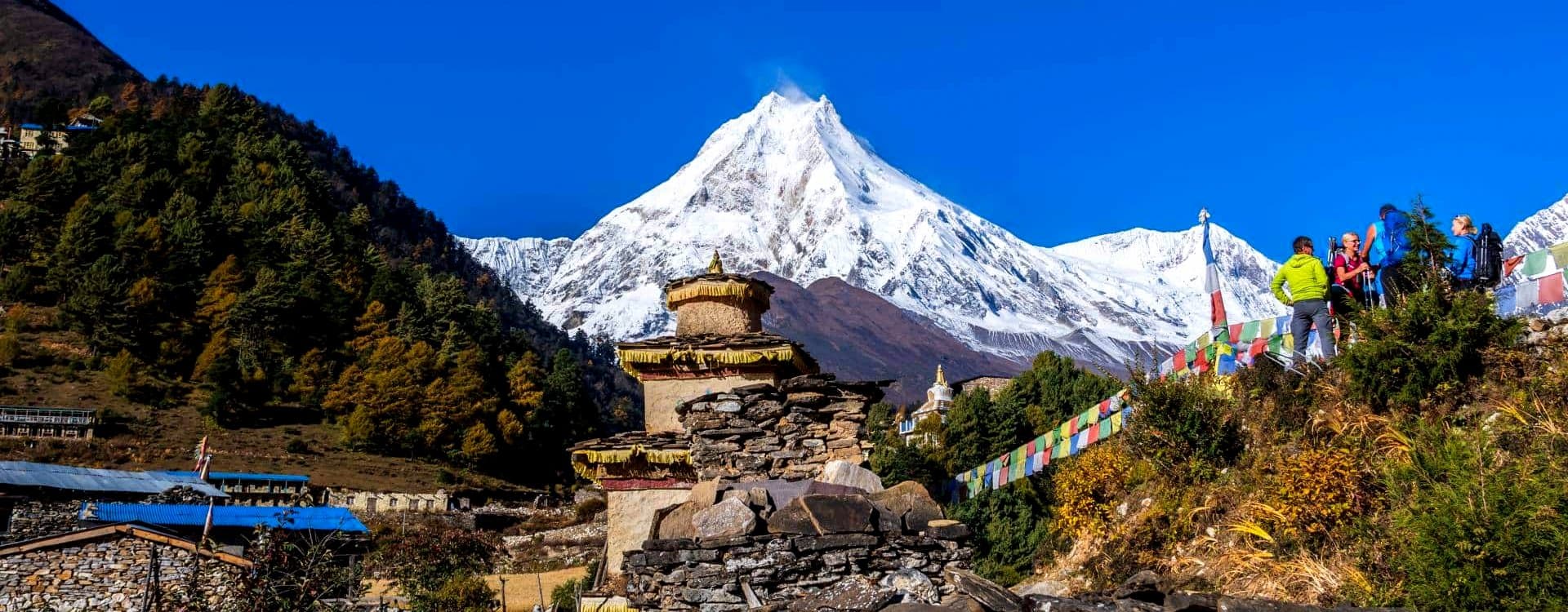
The Manaslu Circuit Trek is a 15-day adventure through Nepal’s restricted Himalayan wilderness, circling the world’s eighth-highest peak, Mount Manaslu (8,163m). This teahouse-based trek combines challenging high-altitude crossings (including the 5,160m Larkya La Pass), Tibetan Buddhist culture, and pristine landscapes—from subtropical valleys to glacial moraines. Unlike crowded routes like Everest or Annapurna, Manaslu offers a less commercialized experience, with only ~3,000 annual trekkers, who require special permits and a licensed guide.
DestinationNepal
Duration15 Days
GradeModerate
ActivitiesTrekking
AccommodationHotel/ Lodge/ Guesthouse
Max. Elevation5106m.
Group SizeMin. 1 Pax
VehiclePrivate Vehicle/ Tourist Bus
MealsBreakfast, Lunch & Dinner
Highlights of Manaslu Circuit Trek
Breathtaking Mountain Views: Witness majestic peaks including Mt. Manaslu (8,163m), the world's eighth-highest mountain, along with Himalchuli, Ngadi Chuli, and other snow-capped giants.
Larkya La Pass Challenge: Conquer the thrilling 5,160m high pass, the trek's highest point offering panoramic Himalayan vistas.
Cultural Immersion: Experience authentic Tibetan Buddhist culture in remote villages like Lho, Samagaon, and Samdo, with ancient monasteries and prayer flags.
Pristine Nature: Trek through diverse landscapes - from lush rhododendron forests to glacial valleys and high alpine terrain in the Manaslu Conservation Area.
Birendra Lake: Visit this stunning glacial lake near Samagaon, reflecting Manaslu's towering peak.
Less Crowded Trails: Enjoy a more peaceful alternative to popular routes like Annapurna or Everest, with only about 3,000 trekkers annually.
Teahouse Experience: Stay in cozy mountain lodges, interacting with local communities along the route.
Diverse Climate Zones: Journey from subtropical valleys to arctic-like high mountain environments.
Historic Trade Route: Follow ancient salt trading paths between Nepal and Tibet.
Wildlife Spotting: Chance to see Himalayan tahr, snow leopards (rare), and various bird species.
Trip Overview
Manaslu Circuit Trek
One of Nepal's most stunning off-the-beaten-path hikes is the Manaslu Circuit Trek. This 15-day trip lets you see immaculate scenery, remote Gurung and Tibetan villages, and the exciting Larkya La Pass (5,160 m), giving you unmatched views of Mt. Manaslu (8,163 m)—the eighth-highest peak in the world. The Manaslu Trek offers a more solitary and culturally immersive experience than busy paths like the Annapurna Circuit and calls for a Manaslu Restricted Area Permit for entry.
With highlights like Samagaon Village, the holy Birendra Lake, and the stunning Larkya La crossing, the precisely planned Manaslu Trek itinerary guarantees adequate acclimatization. Trekkers like teahouse lodgings along the way; expert local guides are there to elevate the encounter. Arrival in Kathmandu starts the journey and includes private transport to the trailhead.
The Manaslu Circuit Trek's top pick, Nepal Adventure Holidays, offers meticulously planned excursions with all required permissions, cozy tea house lodging, knowledgeable local guides, and dependable private transportation included. From the difficult Larkya La Pass (5,160 meters) to the peaceful Birendra Lake and magnificent Mount Manaslu views, our carefully crafted itineraries highlight safety and appropriate acclimatization while presenting the remarkable highlights of the trip. Specializing in small group experiences during prime trekking seasons (October–November and April–May), we provide a more genuine and less busy substitute for well-known itineraries such as the Annapurna Circuit or Everest region trips.
Itinerary of Manaslu Circuit Trek - 15 days
Day 01
Day 01: Arrival at Tribhuvan International Airport, Kathmandu (1,400 m / 4,593 ft)
Activities: Airport pickup and transfer to your hotel. Trek briefing and orientation.
Highlights: Strolling around Thamel, last-minute gear shopping.
Overnight: Kathmandu hotel.
Max. Elevation:1,400m
Day 02
Day 02: Kathmandu Valley UNESCO Sites Sightseeing & Trek Preparation
Activities: Guided tour of Kathmandu’s UNESCO World Heritage sites – Swayambhunath (Monkey Temple), Pashupatinath Temple, Boudhanath Stupa, Kathmandu Durbar Square.
Afternoon: Pre-trek briefing, equipment check, and permit preparation.
Overnight: Kathmandu hotel.
Max. Elevation:1,400m
Duration:4-5 Hours
Day 03
Day 03: Drive from Kathmandu to Machha Khola (930 m / 3,051 ft)
Distance/Time: 8–9 hours by jeep or bus (approx. 160 km).
Route Highlights: Scenic drive through Arughat, Soti Khola, and along the Budhi Gandaki River.
Overnight: Teahouse at Machha Khola.
Max. Elevation:870m
Duration:8-9 hours
Distance:160km
Day 04
Day 04: Trek from Machha Khola to Jagat (1,410 m / 4,626 ft)
Distance/Time: 22 km, 6–7 hours.
Trail Highlights: Cross the Machha Khola, pass Khorlabesi and Tatopani (hot springs), walk through narrow gorges and suspension bridges.
Overnight: Teahouse at Jagat.
Max. Elevation:1,410m
Duration:6-7 Hours
Distance:22km
Day 05
Day 05: Trek from Jagat to Deng (1,804 m / 5,918 ft)
Distance/Time: 20 km, 6–7 hours.
Trail Highlights: Walk through Salleri and Sirdibas, cross suspension bridges over Budhi Gandaki, and pass lush pine and rhododendron forests.
Overnight: Teahouse at Deng.
Max. Elevation:1,804m
Duration:6-7 Hours
Distance:20km
Day 06
Day 06: Trek from Deng to Namrung (2,630 m / 8,628 ft)
Distance/Time: 19 km, 6–7 hours.
Trail Highlights: Entry into the Nubri region with Tibetan influence, mani walls, forests, and terraced fields. Gradual climb with views of the Kutang Himal.
Overnight: Teahouse at Namrung.
Max. Elevation:2,630m
Duration:6-7 Hours
Distance:19km
Day 07
Day 07: Trek from Namrung to Shyala (3,520 m / 11,549 ft)
Distance/Time: 14 km, 5–6 hours.
Trail Highlights: Excellent views of Manaslu, Ganesh Himal, and Himal Chuli; pass through Lihi, Sho, and Lho villages with ancient monasteries and chortens.
Overnight: Teahouse at Shyala.
Max. Elevation:3,520m
Duration:5-6 Hours
Distance:14km
Day 08
Day 08: Hike to Samagaun (3,530 m / 11,581 ft)
Distance/Time: 9 km, 3–4 hours (short day).
Trail Highlights: Gentle walk across pastures with dramatic mountain scenery. Samagaun is the largest village in the region with a rich Tibetan Buddhist culture.
Overnight: Teahouse at Samagaun.
Max. Elevation:3,530m
Duration:3-4 Hours
Distance:9km
Day 09
Day 09: Acclimatization Day at Samagaun
Activities: Rest day with optional hikes to Manaslu Base Camp (4,800 m) or Pungyen Gompa (3,870 m). Explore the village, visit monasteries, or relax to aid acclimatization.
Overnight: Teahouse at Samagaun.
Max. Elevation:3,530m
Day 10
Day 10: Trek from Samagaon to Samdo (3,860 m / 12,664 ft)
Distance/Time: 8 km, 3–4 hours.
Trail Highlights: Easy trail following the Budhi Gandaki River with panoramic mountain views. Samdo is a Tibetan refugee settlement.
Overnight: Teahouse at Samdo.
Max. Elevation:3,860m
Duration:3-4 Hours
Distance:8km
Day 11
Day 11: Trek from Samdo to Dharmasala (4,460 m / 14,632 ft)
Distance/Time: 6 km, 3–4 hours.
Trail Highlights: Gradual ascent over grassy slopes and yak pastures. Views of Larkya Peak and Manaslu. Prepare for crossing the pass the next day.
Overnight: Teahouse at Dharmasala (also called Larkya Phedi).
Max. Elevation:4,460m
Duration:3-4 Hours
Distance:6km
Day 12
Day 12: Trek to Bhimtang via Larkya La Pass (5,160 m / 16,929 ft)
Distance/Time: 15 km, 8–9 hours.
Trail Highlights: Early morning climb to Larkya La Pass (the highest point of the trek) with breathtaking views of Himlung Himal, Kang Guru, and Annapurna II. Long descent to Bhimtang.
Overnight: Teahouse at Bhimtang (3,590 m / 11,778 ft).
Max. Elevation:5,160m
Duration:8-9 Hours
Distance:15km
Day 13
Day 13: Trek from Bhimtang to Goa (2,515 m / 8,251 ft)
Distance/Time: 17 km, 5–6 hours.
Trail Highlights: Cross pine and rhododendron forests, walk along glacial rivers, and enjoy views of Manaslu’s south face.
Overnight: Teahouse at Goa.
Max. Elevation:2,515m
Duration:5-6 Hours
Distance:17km
Day 14
Day 14: Trek to Tilije (2,300 m / 7,545 ft) & Drive to Kathmandu
Distance/Time: 5 km trek, 2 hours + 8–9 hours drive.
Trail Highlights: A short trek to Tilije village, followed by a connection with a jeep/van for the drive back to Kathmandu via Dharapani/Besisahar.
Evening: Check into the hotel in Kathmandu and enjoy a farewell dinner.
Max. Elevation:1,400m
Duration:10 Hours
Day 15
Day 15: Farewell from Kathmandu
Activities: Transfer to Tribhuvan International Airport for your departure flight.
Optional: Extra day in Kathmandu for shopping or sightseeing.
Max. Elevation:1,400m
If the provided schedule isn't suitable for you, we can create personalized travel arrangements.
Travel Insurance (Required for high-altitude rescue)
Personal Expenses (WiFi, hot showers, battery charging)
Tips for Guides/Porters (Recommended: $5-10/day)
Price & Availability
Group size and price
1 Person
US$ 1900
2 - 3 Person
US$ 1550
4 - 7 Person
US$ 1350
8 - 11 Person
US$ 1350
12 - 15 Person
US$ 1300
Essential Information
Best Time for Manaslu Circuit Trek
The Manaslu Circuit Trek is most spectacular during autumn (October-November) and spring (April-May), when stable weather, clear skies, and moderate temperatures (10-20°C) create ideal trekking conditions—autumn offers post-monsoon clarity with breathtaking mountain views and festive energy (Dashain/Tihar), while spring dazzles with blooming rhododendrons and fewer crowds. Winter (December-February) attracts only the most experienced trekkers due to extreme cold (-10°C to -20°C), snow-blocked passes, and limited teahouse availability, though it is rewarded with solitude and stark snowy landscapes. Conversely, monsoon (June-September) is strongly discouraged due to torrential rains, landslides, leeches, and obscured peaks, making trails hazardous and many routes impassable. For a balance of good weather and fewer trekkers, late April or early November are excellent alternatives, while peak-season hikers should target mid-October for perfect conditions. Larkya La Pass (5,160m) is safest in autumn/spring, with winter requiring technical gear and monsoon posing high risks—plan accordingly for this restricted-area adventure.
Manaslu Circuit Trek Helicopter Return
The Manaslu Circuit Trek takes trekkers through dramatic altitude variations, starting at 710m in Soti Khola and peaking at 5,160m at Larkya La Pass, one of Nepal's highest trekking passes. This gradual altitude gain over 12-14 days allows for proper acclimatization, with key stops at 1,340m (Jagat), 3,520m (Samagaon), and 4,460m (Dharmasala) before the pass crossing. The itinerary includes essential acclimatization days, particularly at Samagaon, where trekkers can hike to Birendra Lake (3,900m) or Manaslu Base Camp (4,800m) to adapt safely. Altitude sickness (AMS) risks are managed through careful pacing, hydration, and overnight stays below 4,000m until day 10, making this trek challenging yet achievable for prepared hikers.
The descent phase brings rapid relief from altitude, dropping to 3,590m (Bimthang) after Larkya La and further to 1,963m (Dharapani) by trek's end. This smart altitude profile—combined with teahouse stays at strategic elevations—helps minimize AMS risks while showcasing diverse ecosystems: from subtropical forests to alpine meadows and glacial terrain. Trekkers must monitor symptoms, maintain a slow ascent rate (<400m/day above 3,000m), and communicate with guides. The best seasons (autumn/spring) further reduce altitude-related challenges with stable weather and clear oxygen levels. For those sensitive to elevation, helicopter evacuation options provide critical safety backup in this remote restricted area.
Permits for the Manaslu Circuit Trek
The Manaslu Circuit Trek requires three critical permits due to its status as a restricted area near the Tibetan border. The Manaslu Restricted Area Permit (RAP), priced at $70-100 depending on the season (September-November being most expensive), is mandatory for all trekkers and must be arranged through a licensed trekking agency like Nepal Adventure Holidays. Additionally, you'll need the Manaslu Conservation Area Permit (MCAP) ($30) and the Annapurna Conservation Area Permit (ACAP) ($30), as the route crosses into both protected zones. These permits help regulate tourism, support local conservation efforts, and maintain the region's cultural and environmental integrity. Trekkers must carry passport copies and passport-sized photos for permit processing, which your agency will handle before departure from Kathmandu.
Important permit regulations include group size requirements (minimum 2 trekkers with a guide) and checkpoint verifications at Jagat, Deng, and Samdo, where authorities will inspect your documents. The restricted area permit is particularly crucial beyond Philim Village, where solo trekking is prohibited. Permits are valid for specific entry dates, so itinerary changes require advance approval. While the permit system adds complexity, it ensures sustainable tourism and preserves the region's authentic Himalayan character. For the smoothest experience, book with a reputable operator who manages all paperwork and stays updated on the latest permit regulations (which can change annually).
Preparation for the Manaslu Circuit Trek
Proper preparation for the Manaslu Circuit Trek is crucial for a safe and enjoyable Himalayan adventure. Begin by ensuring you have excellent physical fitness – this 18-21 day trek demands 6-8 hours of daily hiking across challenging terrain with significant altitude gains up to 5,160m at Larkya La Pass. Focus on cardiovascular training (hiking, stair climbing, running) and leg-strengthening exercises 3-4 months prior. Equally important is mental preparation for basic teahouse accommodations, variable weather, and the trek's remote nature. Pack essential gear, including broken-in hiking boots, a four-season sleeping bag, layered clothing for freezing nights, and altitude sickness medication as a precaution. Since this is a restricted area trek, arrange your permits and licensed guide well in advance through a reputable trekking agency in Nepal.
Acclimatization strategy is another critical preparation aspect – the itinerary should include rest days at Namrung (2,630m) and Samagaon (3,520m) to avoid acute mountain sickness (AMS). Learn to recognize AMS symptoms and prepare a first aid kit with blister care, diarrhea medication, and pain relievers. Financial preparation is key – bring enough Nepali rupees (ATMs unavailable after Kathmandu) for teahouse costs, hot showers, and charging devices. Study basic Nepali phrases for better cultural interaction with local Gurung and Tibetan communities. Finally, obtain travel insurance covering high-altitude trekking and helicopter evacuation up to 6,000m. The best preparation combines physical readiness, proper gear, logistical planning, and respect for local customs, ensuring you're ready for this life-changing trek in Nepal's pristine mountain wilderness.
Safety on the Manaslu Circuit Trek
The Manaslu Circuit Trek presents unique safety challenges due to its remote location, high-altitude terrain, and variable weather conditions. The most critical risk is altitude sickness (AMS), as the trail ascends to 5,160m at Larkya La Pass – proper acclimatization days in Samagaon (3,520m) and Dharmasala (4,460m) are vital. Trekkers must follow the "climb high, sleep low" principle, maintain hydration (3-4 liters daily), and recognize AMS symptoms (headaches, nausea, dizziness). A licensed guide is mandatory in this restricted area, providing crucial safety monitoring, route knowledge, and emergency response capabilities. Other hazards include rockfall zones, snow-covered trails (especially in spring), and suspension bridge crossings – always heed your guide's instructions and maintain steady footing.
Emergency preparedness is equally important for this remote Himalayan trek. Carry a comprehensive first aid kit with blister care, diarrhea medication, and pain relievers. Ensure your travel insurance covers high-altitude trekking up to 6,000m and includes helicopter evacuation – the only viable rescue option in this roadless region. Weather safety demands preparation for sudden storms; pack waterproof layers, warm gloves, and sunglasses for snow glare. Since teahouse facilities are basic, practice food and water safety (avoid untreated water and raw vegetables). The best safety practice is trekking with a reputable agency that provides experienced guides, proper equipment, and 24/7 support. By respecting altitude limits, weather warnings, and local guidance, you can safely experience this breathtaking Himalayan adventure.
Trip Extensions on Manaslu Circuit Trek
After completing the Manaslu Circuit Trek, consider these rewarding trip extensions to maximize your Himalayan experience. The Tsum Valley extension (6-8 days) takes you deeper into a sacred Buddhist enclave with ancient monasteries like Rachen Gompa and traditional Tibetan villages, requiring a special Tsum Valley Restricted Permit. Alternatively, combine your trek with the Annapurna Circuit, crossing the Thorong La Pass (5,416m) for an epic Himalayan traverse. For a cultural finale, visit Pokhara for lakeside relaxation and sunrise views of the Annapurna range from Sarangkot, or extend to Chitwan National Park for wildlife safaris featuring rhinos, tigers, and elephants.
For those seeking more high-altitude challenges, the Manaslu Base Camp trek (3-4 days) from Samagaon offers closer glacial views of Mt. Manaslu (8,163m). Shorter options include Kathmandu valley tours to UNESCO World Heritage Sites like Bhaktapur Durbar Square or a helicopter tour to Everest Base Camp for aerial Himalayan panoramas. These trip extensions let you customize your adventure while leveraging existing Nepal travel arrangements – just ensure your Nepal visa and travel insurance cover the additional activities.
Tipping for the Manaslu Circuit Trek
Tipping on the Manaslu Circuit Trek is an important way to recognize the hard work of your guides and porters, though it remains optional based on service quality. For trekking guides, a tip of $8-12 per day is customary, while assistant guides typically receive $5-8 daily. Porters, who carry heavy loads at high altitude, deserve $4-6 per day – consider more if they assist with personal gear. These amounts are usually collected as a group tip pool at the trek's end and distributed fairly. For exceptional service during this challenging Himalayan trek, many trekkers add 10-15% extra to show special appreciation. Always provide tips in Nepali rupees (smaller denominations preferred) and present them personally with thanks – this cultural gesture means more than the amount itself.
The tipping culture on Nepal treks reflects the significant effort required to operate in remote mountain conditions. If booking through a reputable trekking company, ask about their tipping guidelines during the briefing – some provide envelopes for discreet giving. Remember that staff salaries in Nepal's trekking industry are modest, making tips a vital income supplement. For group treks, discuss tipping early to agree on fair amounts and avoid awkwardness later. While tipping is discretionary, proper recognition helps sustain Nepal's professional trekking workforce and ensures quality service for future adventurers on the Manaslu Circuit and other Himalayan trails.
The Manaslu Circuit Trek stands out as one of Nepal's most rewarding and authentic Himalayan experiences, combining challenging high-altitude trekking, rich cultural encounters, and breathtaking mountain scenery. Unlike more commercialized routes, this restricted-area trek offers a true wilderness adventure through remote Tibetan-influenced villages, across the thrilling Larkya La Pass (5,160m), and past stunning glacial lakes like Birendra. With careful acclimatization planning, proper permits, and support from experienced guides, trekkers can safely enjoy this less-crowded alternative to the Annapurna or Everest regions.
What makes the Manaslu Circuit truly special is its perfect balance of physical challenge and cultural immersion – from the prayer-flag-lined trails of Samagaon to the ancient monasteries of Lho. The trek's diverse landscapes, from lush subtropical valleys to arctic high passes, showcase Nepal's incredible natural beauty. Whether you choose the classic 14-18 day itinerary or opt for a helicopter return, this journey leaves trekkers with lifelong memories and a deep appreciation for Himalayan culture. For those seeking an off-the-beaten-path adventure that remains accessible to determined trekkers, the Manaslu Circuit delivers an unforgettable experience that captures the raw spirit of the Nepal Himalayas.
Manaslu Circuit Trek FAQs
Q: What is the best time to trek the Manaslu Circuit?
A: The best time to trek is during the pre-monsoon (March to May) and post-monsoon (late September to November) seasons, when the weather is stable and the views are clear.
Q: Do I need a special permit for the Manaslu Circuit?
A: Yes, trekkers need the Manaslu Restricted Area Permit (RAP) and the Annapurna Conservation Area Permit (ACAP) to enter the region.
Q: How difficult is the Manaslu Circuit Trek?
A: It is considered a moderate to strenuous trek due to the long days, high altitude (up to 5,160 m), and rugged terrain, including crossing the Larkya La Pass.
Q: How many days does the Manaslu Circuit Trek usually take?
A: The trek typically takes 14 to 16 days, depending on the itinerary, acclimatization days, and pace.
Q: Is it safe to trek the Manaslu Circuit alone?
A: Trekking alone is possible but not recommended due to the remote nature, restricted permits, and altitude challenges. Hiring a guide or joining a group is advised.
Q: What kind of accommodation is available on the Manaslu Circuit?
A: Accommodation is mostly in teahouses and lodges offering basic amenities. Facilities improve in larger villages but remain simple at higher altitudes.
Q: What should I pack for the Manaslu Circuit Trek?
A: Essentials include warm clothing (layers), waterproof gear, sturdy trekking boots, trekking poles, a good sleeping bag, sun protection, and personal medications.
Q: How is the food on the trek?
A: Food is primarily Nepali and Tibetan cuisine, such as dal bhat, momos, noodles, and soups. Vegetarian and vegan options are available, but choices can be limited at higher altitudes.
Q: How do I prevent altitude sickness on the trek?
A: Proper acclimatization, staying hydrated, ascending slowly, and listening to your body are crucial. Taking rest days and avoiding alcohol can help reduce risk.
Q: Is there a mobile network and internet access on the trek?
A: Mobile coverage is spotty and mostly available in larger villages. Some lodges offer limited Wi-Fi, but expect slow or intermittent service.
Q: Can I charge my electronic devices on the trail?
A: Yes, many teahouses provide charging facilities for a small fee, especially in larger villages, but availability is limited at higher altitudes.
Q: Is the Manaslu Circuit suitable for children or older adults?
A: The trek is physically demanding and at high altitude, so it’s generally recommended for fit adults with trekking experience. Children and older adults should consult with a doctor before attempting.
Q: How do I get to the starting point of the Manaslu Circuit Trek?
A: Most trekkers start from Soti Khola or Arughat Bazaar, accessible by jeep or local bus from Kathmandu or Pokhara.
Q: Can I hire porters or pack animals on the trek?
A: Yes, hiring porters or pack animals like mules is common and helps reduce your load, making the trek more comfortable.
Crossing the Larkya La Pass was tough, but the support from Nepal Adventure Holidays made it manageable. The team was well-organized, and our guide checked on our health daily. The views of Manaslu and the surrounding peaks were absolutely worth the effort. A must-do trek for adventure lovers!
SSophie D4th Apr, 2025
A Perfect Blend of Culture & Nature
The Manaslu Circuit Trek was a perfect mix of stunning Himalayan scenery and rich cultural experiences. Our guide, Mingma, shared fascinating insights about the local villages and Tibetan Buddhist traditions. Nepal Adventure Holidays took care of every detail, making the trip seamless. Highly recommended!
JJames26th Mar, 2025
Best Trekking Company in Nepal!
From the moment we booked, the team at Nepal Adventure Holidays was professional and attentive. The Manaslu trek was challenging but rewarding, with diverse landscapes from lush forests to high-altitude passes. The porters were friendly, and the food was surprisingly good. Will trek with them again!
.4828dc85.png&w=256&q=75&dpl=dpl_4wpSjHUy1BcszSUAUcwRxno9aXXy "Affiliation 1")
.a14f8e77.png&w=256&q=75&dpl=dpl_4wpSjHUy1BcszSUAUcwRxno9aXXy "Affiliation 2")
.7a169c70.png&w=256&q=75&dpl=dpl_4wpSjHUy1BcszSUAUcwRxno9aXXy "Affiliation 3")
.360ce5ac.png&w=96&q=75&dpl=dpl_4wpSjHUy1BcszSUAUcwRxno9aXXy "Affiliation 4")
.b0c53703.png&w=384&q=75&dpl=dpl_4wpSjHUy1BcszSUAUcwRxno9aXXy "Affiliation 5")
.f0df82a6.png&w=420&q=75&dpl=dpl_4wpSjHUy1BcszSUAUcwRxno9aXXy "Affiliation 6")
.06f9557e.png&w=384&q=75&dpl=dpl_4wpSjHUy1BcszSUAUcwRxno9aXXy "Affiliation 7")