The Langtang Gosaikunda Trek is an ambitious 15-day journey that links three of Nepal's most rewarding trekking regions into a single continuous route. Beginning in the glaciated Langtang Valley beneath Langtang Lirung, the trek crosses through Thulo Syabru and Shin Gompa to reach the sacred alpine lakes of Gosaikunda at 4,380 meters, then continues over the dramatic Laurebina Pass into the Helambu region before descending back to Kathmandu via Sundarijal. Combining glacial valleys, sacred lakes, high mountain passes, and Tamang and Sherpa culture, this trek is one of the most complete and rewarding long-distance itineraries in the central Himalaya.
DestinationNepal
Duration15 Days
GradeModerate
ActivitiesTrekking
AccommodationHotel/ Lodge/ Guesthouse
VehiclePrivate Vehicle/ Tourist Bus
MealsBreakfast, Lunch & Dinner
Highlights of Langtang Gosaikunda Trek
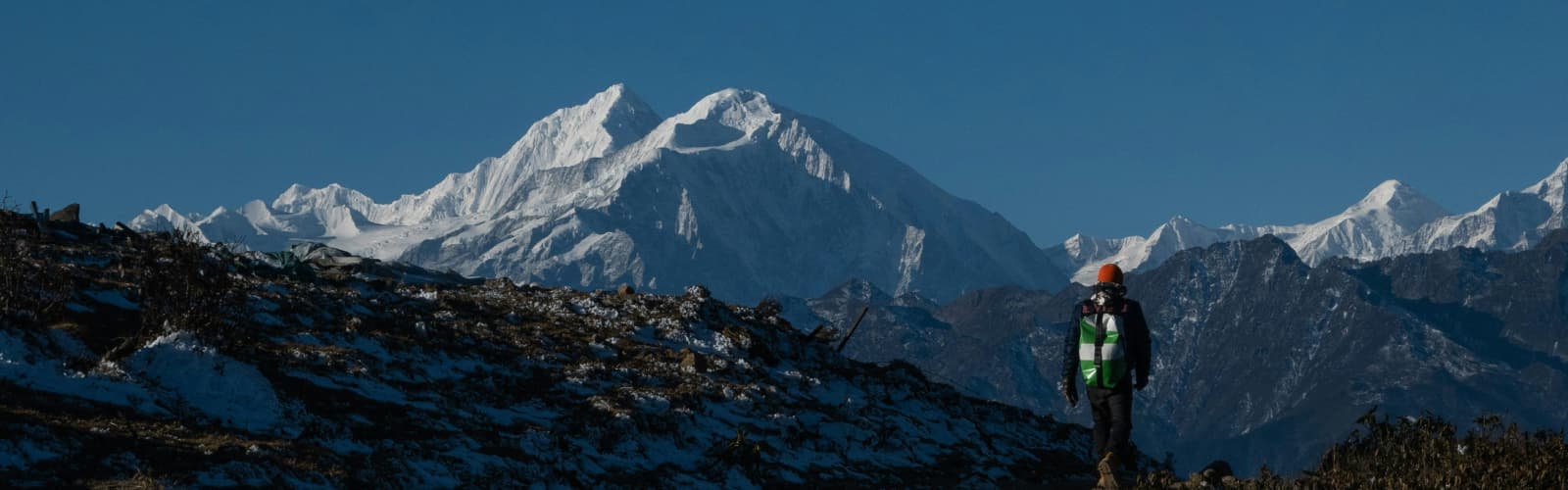
Close-up views of Langtang Lirung and surrounding glaciated peaks from Kyanjin Gompa
An optional high-altitude hike to Tsergo Ri or Kyanjin Ri during the exploration day
The sacred alpine lakes of Gosaikunda at 4,380 meters
A dramatic crossing of Laurebina Pass at 4,610 meters
Rich Tamang, Tibetan, and Sherpa culture across three distinct trekking regions
Forested trails and birdlife within Shivapuri National Park on the final stretch
A continuous route from Syabrubesi to Sundarijal without retracing the same trail
Comprehensive accommodation and meal inclusions throughout the trek
Trip Overview
Langtang Gosaikunda Trek
One of the most comprehensive and diversified trekking itineraries available in central Himalaya, the Langtang Gosaikunda trek combines the glaciers of the Langtang valley, the sacred lakes of Gosaikunda and the cultures of the Helambu region into a continuous journey lasting fifteen days. Starting with the traditional Langtang Valley trek below Langtang Lirung, this extended trek traverses ridgelines into the remote and serene Gosaikunda lakes, traverses the dramatic Laurebina Pass, and then descends into Helambu, eventually returning to Kathmandu. This is a longer and more demanding itinerary best suited for those trekkers seeking a complete and unforgettable experience in the Himalayas, and is managed by the experienced team of Nepal Adventure Holidays.
Covering twelve days of trekking with an extensive route, this itinerary climbs to a maximum altitude of 4,610 meters on Laurebina Pass and up to 4,380 meters on Gosaikunda lake.
The trekking commences with a scenic drive from Kathmandu to Syabrubesi and proceeds along the well-established Langtang Valley trek up to Kyanjin Gompa with an extra day in the area to hike up to Tsergo Ri or Kyanjin Ri. From Kyanjin Gompa, instead of returning via the same trail, you travel west through Thulo Syabru and Shin Gompa to reach the pristine alpine lakes of Gosaikunda, cross the high mountain pass of Laurebina to reach Helambu through Ghopte and Thadepati, and then continue down through Kutumsang and Chisapani to the outskirt of Kathmandu city at Sundarijal. In the Langtang Valley trek, you pass through diverse cultures of Tamangs and Tibetans in settlements such as Kyanjin Gompa and Langtang village, while the view of glaciated peaks like Langtang Lirung is truly breathtaking. As you ascend towards the sacred Gosaikunda lakes (both Hindu and Buddhist holy site), you are greeted by the breathtaking high-altitude scenery with the distinct cultures of Buddhist and Hindus mixing.
The Helambu section of the trek brings you closer to the Sherpa and Tamang culture and through lush forests of Shivapuri National Park before arriving back to the capital city of Kathmandu.
The best season for this trek is Spring (March-May) and Autumn (September-November). The clear mountain skies offer fantastic views of the passes and the lakes. You can experience cold weather and high winds at the pass of Laurebina and in Gosaikunda lake even in favorable weather.
Be ready for a challenging trek as you traverse this unique trail with high altitude and a demanding pass. Trekking the Langtang Gosaikunda route is a journey not to be missed and is facilitated by Nepal Adventure Holidays.
Itinerary of Langtang Gosaikunda Trek - 15 days
Day 01
Arrival in Kathmandu (1,400m/4,593ft)
Your Langtang Gosaikunda Trek begins with arrival at Tribhuvan International Airport, where a Nepal Adventure Holidays representative will meet you and transfer you to your hotel by private vehicle. The rest of the day is kept free for rest and recovery, followed by a trip briefing covering the extended itinerary, essential gear, and any final preparations ahead of the drive to Syabrubesi.
Max. Elevation:1,400m
Day 02
Drive from Kathmandu (1,400m/4,593ft) to Syabrubesi (1,460m/4,790ft)
A scenic drive from Kathmandu follows hill roads through river valleys and rural villages to reach Syabrubesi, the starting point of the trek. Arrival in Syabrubesi allows time to settle into a local tea house and make final preparations before the trekking portion of the itinerary begins the following day.
Max. Elevation:1,460m
Duration:6-7 Hours
Day 03
Trek from Syabrubesi (1,460m/4,790ft) to Lama Hotel (2,460m/8,070ft)
The trek begins by following the Langtang Khola upstream through dense forests of oak, rhododendron, and bamboo. The trail gradually gains elevation, passing through diverse forest terrain rich with birdlife, before reaching Lama Hotel, a small cluster of tea houses that serves as a popular first overnight stop in the valley.
Max. Elevation:2,460m
Duration:6-7 Hours
Day 04
Trek from Lama Hotel (2,460m/8,070ft) to Langtang Village (3,450m/11,318ft)
Continuing upstream, the trail emerges from the forest into more open terrain, with views of Langtang Lirung beginning to appear as the valley widens. The trek reaches Langtang village, a traditional Tamang settlement rebuilt following the 2015 earthquake, offering insight into both mountain village life and the valley's resilience.
Max. Elevation:3,450m
Duration:5-6 Hours
Day 05
Trek from Langtang Village (3,450m/11,318ft) to Kyanjin Gompa (3,870m/12,696ft)
A relatively short trekking day leads from Langtang village to Kyanjin Gompa, the highest permanent settlement in the valley. Along the way, the valley opens up dramatically, with Langtang Lirung and surrounding peaks dominating the skyline. Kyanjin Gompa is home to a historic monastery and a local cheese factory, both worth visiting during the extended stay here.
Max. Elevation:3,870m
Duration:6-7 Hours
Day 06
Exploration Day at Kyanjin Gompa (Hike to Tsergo Ri or Kyanjin Ri)
This day is dedicated to a high-altitude side hike from Kyanjin Gompa, with trekkers choosing between Kyanjin Ri or the slightly more demanding Tsergo Ri, both offering exceptional panoramic views of Langtang Lirung, Langtang II, and the surrounding glaciated ridgelines. The hike also serves as a valuable acclimatization day, with trekkers returning to Kyanjin Gompa for a second night before beginning the next stage of the journey.
Max. Elevation:3,870m
Day 07
Trek from Kyanjin Gompa (3,870m/12,696ft) to Lama Hotel (2,460m/8,070ft)
The descent begins by retracing the route back through Langtang village and into the forested lower valley, with the elevation drop offering welcome relief after the high-altitude stay at Kyanjin Gompa. This stage brings trekkers back to Lama Hotel, setting up for the transition toward the Gosaikunda section of the trek.
Max. Elevation:3,870m
Duration:6-7 Hours
Day 08
Trek from Lama Hotel (2,460m/8,070ft) to Thulo Syabru (2,250m/7,381ft)
Rather than continuing all the way back to Syabrubesi, the trail branches toward Thulo Syabru, a larger Tamang village with terraced farmland and views back toward the Langtang range. This stage marks the beginning of the trek's second major section, heading west toward Gosaikunda rather than retracing the original route.
Max. Elevation:2,460m
Duration:6-7 Hours
Day 09
Trek from Thulo Syabru (2,250m/7,381ft) to Shin Gompa (3,330m/10,925ft)
Day 10
Trek from Shin Gompa (3,330m/10,925ft) to Gosaikunda (4,380m/14,370ft)
This stage climbs significantly in elevation, passing through increasingly alpine terrain before reaching Gosaikunda, a cluster of sacred lakes considered holy in both Hindu and Buddhist tradition. The high-altitude landscape surrounding the lakes offers a dramatic contrast to the forested valleys of the earlier stages, and the overnight stay here is one of the trek's most memorable.
Max. Elevation:4,380m
Duration:6-7 Hours
Day 11
Trek from Gosaikunda (4,380m/14,370ft) to Ghopte (3,430m/11,253ft) via Laurebina Pass (4,610m/15,124ft)
The trek's highest point is reached on this stage, crossing Laurebina Pass at 4,610 meters before descending toward Ghopte. This is one of the most physically demanding days of the itinerary, combining a high-altitude pass crossing with a substantial elevation loss, and rewards trekkers with sweeping views before the descent into more sheltered terrain.
Max. Elevation:4,610m
Duration:7-8 Hours
Day 12
Trek from Ghopte (3,430m/11,253ft) to Kutumsang (2,470m/8,103ft) via Thadepati (3,690m/12,106ft)
Continuing the descent, the trail passes through Thadepati, a scenic ridgeline point offering wide views over the surrounding hills, before continuing down to Kutumsang. This stage marks the transition into the Helambu region, with terrain becoming progressively more forested and village-dense.
Max. Elevation:3,430m
Duration:6-7 Hours
Day 13
Trek from Kutumsang (2,470m/8,103ft) to Chisapani (2,165m/7,103ft)
The trail continues descending through Tamang villages and forested terrain toward Chisapani, situated on the edge of Shivapuri National Park. This stage offers a gentler pace after the demanding pass crossing two days prior, with increasingly familiar lowland scenery signaling the approach to Kathmandu.
Max. Elevation:2,470m
Duration:6-7 Hours
Day 14
Trek from Chisapani (2,165m/7,103ft) to Sundarijal (1,460m/4,790ft), then Drive to Kathmandu (1,400m/4,593ft)
The final trekking day descends through Shivapuri National Park, known for its diverse forest cover and birdlife, before reaching Sundarijal on the edge of the Kathmandu Valley. From here, a private vehicle completes the journey back to Kathmandu, bringing the trekking portion of the Langtang Gosaikunda Trek to a close.
Max. Elevation:2,165m
Duration:6-7 Hours
Day 15
Final Departure
Your Next Destination On the final day, an airport transfer is provided in time for your international departure flight, or you may choose to continue onward to your next destination in Nepal. Nepal Adventure Holidays' team ensures a smooth and timely transfer to bring this comprehensive Himalayan journey to a fitting close.
Max. Elevation:1,400m
If the provided schedule isn't suitable for you, we can create personalized travel arrangements.
Pickup from Kathmandu International Airport according to your arrival time and date
2 nights' hotel accommodation in Kathmandu including breakfast (3-star category)
Public bus ticket to Syabrubesi (trek starting point) from Kathmandu
Private car/van transfer to Kathmandu from Sundarijal (trek endpoint)
One English-speaking trekking guide (Kathmandu to Kathmandu), including their accommodation, food, transportation, equipment, and salary
12 nights' accommodation during the trek, with three meals a day (breakfast, lunch, and dinner)
All necessary trekking permits for the route
All government taxes and service charges
An airport transfer service for your final departure
What's Excluded in Langtang Gosaikunda Trek
International airfare and Nepal entry visa fee, meals in Kathmandu, and travel/medical insurance
Personal expenses such as all kinds of drinks, hot showers, battery charging, WiFi, or data plans
Expenses incurred due to unavoidable events such as road wrecks or flight delays
Tips for guide and porter (customary and expected)
Price & Availability
Essential Information
Transportation for Langtang Gosaikunda Trek
The transportation details for this trek include taking a public bus at the beginning to reach the trailhead and taking a private vehicle at the conclusion. It means going by public bus all the way to Syabrubesi, the starting point of the trek from Kathmandu and getting back to Kathmandu from Sundarijal by a private car or van because this trek is a continuous linear trail from start point to end point.
As this trek doesn’t involve any internal flight, hence no chance of flight delays due to weather. The road access to Syabrubesi is often disrupted during the monsoon due to landslide but it depends on the season.
Food During the Langtang Gosaikunda Trek
Meals are included in the full board trek for all 12 nights on the trail and comprise breakfast, lunch, and dinner. Your options on the tea house and lodge menus include Nepali dal bhat, noodle soups, fried rice, momos, pasta, breakfast fare like porridge, eggs and pancakes – and there’s a degree of regional variance on the trail between Langtang, Gosaikunda and Helambu. In Kyanjin Gompa you may also have opportunity to try the locally made yak cheese produced at a tiny cheese factory within the village.
Vegetarian and vegan trekkers need have no concerns about their diet on the trail and the readily available dal bhat and vegetable dishes are an excellent source of protein and sustenance.
Boiled, filtered or bottled water should be available on most stops although bottled water becomes somewhat unreliable higher up on the trail, especially in places such as Gosaikunda and Laurebina Pass.
Langtang Gosaikunda Trek Accommodation
Accommodation is included for all 12 nights on trek; usually basic shared twins and shared bathrooms are encountered lower down on trek (e.g. Syabrubesi, Lama Hotel, Thulo Syabru). Further up trek in Kyanjin Gompa, Gosaikunda and Ghopte more rudimentary conditions will be found, a result of the isolation of these places and the altitude.
Nevertheless, accommodation will always be comfortable enough for the evening to meet up in a communal warm dining area.
Back in Kathmandu, we have arranged for you to stay in a 3-star category hotel on a bed and breakfast basis for the two nights at either end of your trek.
Langtang Gosaikunda Trek Permits
Trekking across this extended route requires permits covering both the Langtang and Gosaikunda/Helambu sections, all of which are included as part of the Nepal Adventure Holidays package.
Langtang National Park permit
Gosaikunda area and Shivapuri National Park permits, where applicable
TIMS Card (Trekkers' Information Management System), where required
Permit checkpoints are located at designated points along the route, including near Syabrubesi and Dhunche
All permits are processed in advance through offices in Kathmandu
Langtang Gosaikunda Trek Difficulty
The duration and route allow for a comparatively slower rate of acclimatisation than shorter routes reaching these altitudes. This opportunity is capitalized upon by allocating a day in Day 6 at Kyanjin Gompa to explore, which also helps to get used to altitude at a reasonable level before going higher at Gosaikunda and Laurebina pass.
Steady pace for the climb up to Gosaikunda at day 9 and 10 is also vital, as is keeping fluids up and resting.
Langtang Gosaikunda Trek Altitude Sickness
Reaching 4,610 meters at Laurebina Pass means altitude sickness is a significant consideration on this trek, and trekkers should be well informed given the extended time spent above 3,500 meters.
Symptoms:
Headache and dizziness
Nausea or loss of appetite
Fatigue beyond normal exertion
Shortness of breath at rest or during mild activity
Prevention strategies:
Ascend gradually and avoid rushing on the climb toward Gosaikunda
Stay well hydrated throughout the trek, especially in the days before the pass crossing
Avoid alcohol and heavy meals at higher elevations
Make full use of the acclimatization day at Kyanjin Gompa
Immediate actions if symptoms appear:
Inform your guide immediately
Rest and avoid further ascent until symptoms improve
Descend to a lower elevation if symptoms worsen
Seek medical attention or emergency evacuation support if symptoms become severe, particularly before or during the Laurebina Pass crossing
Langtang Gosaikunda Trek Packing List
Clothing
Moisture-wicking base layers
Insulated down jacket
Waterproof and windproof outer shell
Trekking trousers
Warm hat and sun hat
Insulated gloves
Wool-blend trekking socks
Trekking Gear
Sturdy, broken-in trekking boots
Trekking poles
Headlamp with spare batteries
Daypack (30–40 liters)
Warm sleeping bag (rated for sub-zero temperatures, essential for Gosaikunda and Ghopte)
Personal Items
Reusable water bottle
Water purification tablets or filter
Energy snacks and bars, especially for the long Laurebina Pass day
UV-protective sunglasses
Quick-dry travel towel
Toiletries
Toothbrush and toothpaste
Biodegradable soap or wet wipes
Hand sanitizer
Sunscreen and SPF lip balm
Electronics
Power bank
Universal travel adapter
Camera or smartphone
Spare batteries or charging cables
Documents
Passport and visa copies
Passport-sized photos
Travel insurance documents (including high-altitude and evacuation coverage)
Printed itinerary and permit copies
Medicines
Personal prescription medication
Basic first-aid kit
Diarrhea and altitude sickness medication
Blister plasters and pain relievers
Preparation and Safety for Langtang Gosainkunda Trek
Due to the trek's distance, elevation, and crossing of the challenging Laurebina pass, some additional preparation may be necessary beyond that needed for shorter area treks. Develop cardio strength in the months ahead through your regular running, biking or walking, with special attention given to sustaining stamina for the many trekking days in a row.
Try doing a workout or two with a daypack loaded with weights while walking on hills or mountains, as much of the trail gains and loses elevation over the twelve day trek - especially on Day 11's altitude-distance combination! You'll appreciate the additional guidance and safety offered by having an expert guide with you during the whole journey as a part of this package.
Key preparation and safety points:
Build strong cardio and endurance fitness at least 8–10 weeks before the trek
Train specifically for long, sustained trekking days at altitude
Trek with an experienced guide for safety and support throughout
Use the Kyanjin Gompa exploration day fully for acclimatization
Carry essential first-aid and altitude sickness medication
Monitor weather conditions closely ahead of the Gosaikunda and Laurebina Pass stages
Travel Insurance for Langtang Gosainkunda Trek
Full comprehensive travel insurance must be purchased independently for this trek; it’s not included within your package price. Due to the altitude on Laurebina Pass and the length and remoteness of this journey, ensure that your travel insurance covers you for trekking to altitudes of up to 5,000 metres, as well as emergency helicopter rescue and evacuation for any sudden illness or injury.
Often policies will automatically exclude travel for high altitude trek tours, so it is imperative that you review your insurance policy or select a specific adventure travel insurance policy.
Experience one of the best extended Himalayan trekking packages. It’s the Langtang Gosaikunda Trek that joins three great trekking trails - Langtang valley Trek, Gosaikunda Lake trek and Helambu Trek - into one trip, which takes about fifteen days.
In a 15 day langtang gosaikunda trek you have fantastic and diverse walks ranging from walking amidst snow covered peaks such as Langtang Lirung in langtang valley and crossing challenging laurebina la in Gosaikunda region, to walking down to rhododendron forests in helambu and visiting holy gosaikunda.
Our local Sherpa guides have led Langtang Gosaikunda treks for over fifteen years and know every contour of this terrain; we at Nepal Adventure Holidays arrange a wide array of trekking adventures for you.
Langtang Gosaikunda Trek FAQs
How difficult is the Langtang Gosaikunda Trek?
The trek is graded challenging, spanning twelve trekking days with a maximum altitude of 4,610 meters at Laurebina Pass and a demanding combined pass crossing and descent on Day 11.
What is the best season for the Langtang Gosaikunda Trek?
Spring (March to May) and autumn (September to November) offer the clearest skies and most stable conditions for the high-altitude sections around Gosaikunda and Laurebina Pass.
Is WiFi available along the trail?
Some tea houses along the route offer WiFi for a fee, though connectivity becomes unreliable or unavailable at higher, more remote points such as Gosaikunda and Ghopte.
Can I charge my phone and camera during the trek?
Yes, most tea houses offer charging facilities for a small fee, which is excluded from the package. A power bank is strongly recommended given the trek's length and remoteness.
Is there a significant altitude sickness risk on this trek?
Yes, given the extended time spent above 3,500 meters and the high point of 4,610 meters at Laurebina Pass. Careful pacing, hydration, and use of the acclimatization day are essential.
Is a guide mandatory for this trek?
Yes, an experienced English-speaking guide is included for the full Kathmandu-to-Kathmandu itinerary and is essential given the trek's length and remote sections.
What is the cost of the Langtang Gosaikunda Trek?
Costs vary depending on group size, season, and any additional services requested. Contact Nepal Adventure Holidays for a detailed quote based on your travel dates.
Can I do the Langtang Gosaikunda Trek solo?
Yes, solo trekkers can join this itinerary with a guide; given the trek's length and remoteness, discussing porter arrangements directly with Nepal Adventure Holidays is recommended.
What permits are required for this trek?
This trek requires permits covering the Langtang, Gosaikunda, and Helambu/Shivapuri sections of the route, all of which are included as part of this package.
How is the food and accommodation quality on this trek?
Food and accommodation are considered good throughout, with full board meals and appropriate lodging at each stage, though facilities become more basic at higher, remote points like Gosaikunda.
What fitness level is required for this trek?
Good fitness and prior high-altitude trekking experience are strongly recommended, given the trek's length, altitude, and the demanding Laurebina Pass crossing.
Why does the route not retrace itself back to Syabrubesi?
Instead of returning the same way, the itinerary continues west from Lama Hotel toward Gosaikunda and then descends through Helambu to Sundarijal, offering a continuous journey through three distinct regions rather than an out-and-back route.
Is Gosaikunda a religiously significant site?
Yes, the lakes at Gosaikunda are considered sacred in both Hindu and Buddhist tradition and attract pilgrims as well as trekkers, particularly during certain festival periods.
How is this trek different from the standard Langtang Valley Trek?
This itinerary extends well beyond the standard Langtang Valley Trek by continuing to Gosaikunda and Laurebina Pass before descending through Helambu, making it significantly longer, higher, and more demanding overall.
What should I pack for this trek?
Essentials include warm layered clothing, a down jacket rated for very cold conditions, sturdy trekking boots, trekking poles, a headlamp, and altitude sickness medication, as detailed in the packing list above.
This tour covers a lot in one day, so be prepared for some walking! The guide was patient and answered all our questions. The only minor issue was the midday heat, but the company provided water, which helped. Overall, a great way to see Kathmandu’s UNESCO treasures in a short time.
SSophie D4th Apr, 2025
A Perfect Blend of Culture & Nature
The Manaslu Circuit Trek was a perfect mix of stunning Himalayan scenery and rich cultural experiences. Our guide, Mingma, shared fascinating insights about the local villages and Tibetan Buddhist traditions. Nepal Adventure Holidays took care of every detail, making the trip seamless. Highly recommended!
JJames26th Mar, 2025
Best Trekking Company in Nepal!
From the moment we booked, the team at Nepal Adventure Holidays was professional and attentive. The Manaslu trek was challenging but rewarding, with diverse landscapes from lush forests to high-altitude passes. The porters were friendly, and the food was surprisingly good. Will trek with them again!
.4828dc85.png&w=256&q=75&dpl=dpl_4wpSjHUy1BcszSUAUcwRxno9aXXy "Affiliation 1")
.a14f8e77.png&w=256&q=75&dpl=dpl_4wpSjHUy1BcszSUAUcwRxno9aXXy "Affiliation 2")
.7a169c70.png&w=256&q=75&dpl=dpl_4wpSjHUy1BcszSUAUcwRxno9aXXy "Affiliation 3")
.360ce5ac.png&w=96&q=75&dpl=dpl_4wpSjHUy1BcszSUAUcwRxno9aXXy "Affiliation 4")
.b0c53703.png&w=384&q=75&dpl=dpl_4wpSjHUy1BcszSUAUcwRxno9aXXy "Affiliation 5")
.f0df82a6.png&w=420&q=75&dpl=dpl_4wpSjHUy1BcszSUAUcwRxno9aXXy "Affiliation 6")
.06f9557e.png&w=384&q=75&dpl=dpl_4wpSjHUy1BcszSUAUcwRxno9aXXy "Affiliation 7")