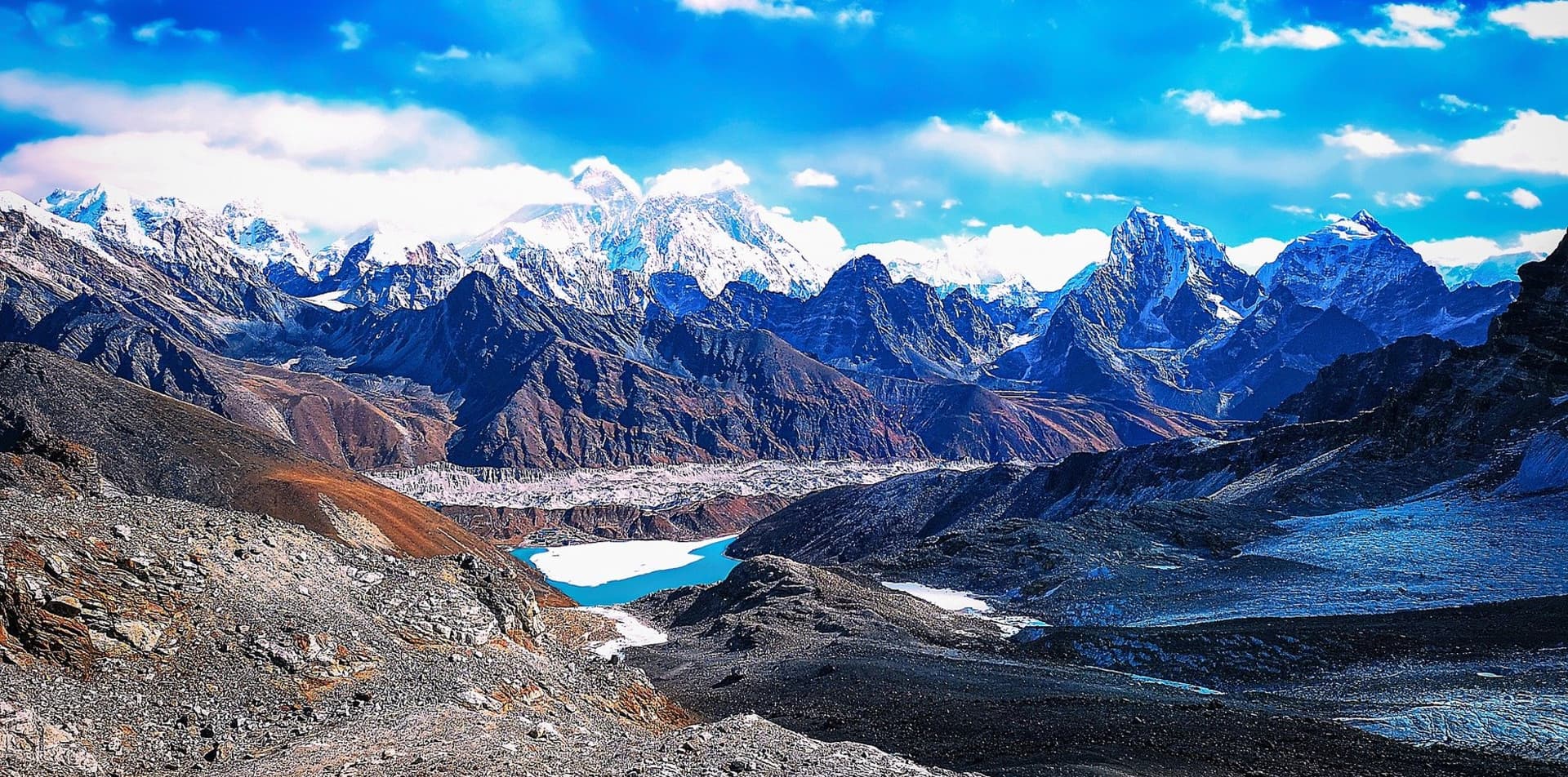
The Everest Base Camp (EBC) trek is one of the most celebrated trekking journeys in the world. Winding through the legendary Khumbu region of Nepal — past ancient monasteries, thundering glacial rivers, colourful prayer flags, and long caravans of yaks — this trail leads to the foot of the world's highest peak at 5,364 metres (17,598 ft). Every year, thousands of adventurers from across the globe make the pilgrimage to stand where Sir Edmund Hillary and Tenzing Norgay began their historic ascent in 1953.

But make no mistake: this is not a casual walk. The EBC trek covers roughly 130 kilometres over 12–14 days, passing through extremes of weather, altitude, and terrain. Temperatures that feel pleasant at midday can drop below -15°C after sunset. The Khumbu region takes you from subtropical forest at Lukla (2,860 m) all the way up to rocky, icy moraines near Base Camp — a landscape that demands both mental resilience and the right physical preparation.
What you carry on the EBC trek directly determines your safety, comfort, and enjoyment. Too little, and you're exposed to altitude-related illness, frostbite, or injury. Too much, and unnecessary weight drains your energy at elevations where every step already demands more from your body than it does at sea level. This blog breaks down everything you need to bring — and just as importantly, what to leave behind — so you can arrive in Namche Bazaar, Dingboche, and ultimately Base Camp, fully equipped and ready for the journey of a lifetime.
Key Highlights of the EBC Trek Packing List
Before diving deep, here are the 8 most critical packing categories every EBC trekker must get right:
-
Clothing & Layering System: Your defence against rapidly changing weather
-
Footwear: The single most important gear decision you'll make
-
Sleeping Gear: Warmth and recovery at high-altitude teahouses
-
Health, Safety & First Aid: Your lifeline above 4,000 metres
-
Hydration & Nutrition: Fuelling your body at altitude
-
Electronics & Navigation: Staying safe, connected, and documented
-
Sun & Skin Protection: UV radiation doubles above 5,000 metres
-
Documents, Permits & Money: The administrative essentials you cannot forget
Clothing & Layering System
The golden rule of EBC trekking clothing is: no cotton, ever. Cotton absorbs moisture, loses its insulating property when wet, and dries slowly — in cold mountain conditions, this can be life-threatening. Everything you wear should be merino wool or synthetic.
The Khumbu region demands a three-layer system:
-
Base Layer (Moisture Management) Your base layer sits directly against your skin and its job is to wick sweat away. Bring 2–3 merino wool or synthetic long-sleeve tops and 2 pairs of thermal leggings. Merino is preferred because it naturally resists odour — important on a two-week trek with limited showers.
-
Mid Layer (Insulation) This is your warmth layer. A 100–200 weight fleece jacket is indispensable for evenings and rest stops. More importantly, invest in a quality down jacket with 600+ fill power — this becomes your primary insulation above Namche Bazaar (3,440 m), where temperatures drop sharply, especially at night. A softshell jacket adds wind resistance and serves as a versatile mid-layer during active hiking.
-
Outer Shell (Protection from Elements) A Gore-Tex or equivalent hardshell waterproof jacket is non-negotiable. It shields you from wind, rain, and snow. Pair it with waterproof trekking trousers or zip-off convertible trousers for versatility across different elevations.
-
Head, Hands & Feet Pack a warm beanie covering your ears, a balaclava or neck gaiter (essential above Dingboche at 4,410 m), and both lightweight liner gloves and a pair of warm waterproof mittens or gloves. For socks, 4–5 pairs of merino wool trekking socks prevent blisters and keep feet warm. Moisture-wicking underwear (4–5 pairs) rounds out the essentials.
Footwear
Your boots are the most important piece of gear you will pack. Period.
Choose waterproof trekking boots with ankle support — Gore-Tex lined, with a sturdy lug sole for grip on rocky and icy terrain. The most critical rule: break them in completely before departure. Never attempt to break in boots on the trail itself. Blisters at altitude, far from medical care, are not a minor inconvenience — they can force you off the trail.
Complement your boots with:
-
Camp sandals or Crocs for wearing inside teahouses in the evenings
-
Gaiters to keep snow and mud out above Lobuche (4,940 m)
-
Microspikes or crampons if trekking between October and April, particularly on the approach to Gorak Shep (5,140 m) and Kala Patthar (5,545 m)
Pro tip: Add neoprene insoles or thick aftermarket insoles to your boots. Cold ground conducts upward through boot soles at high altitude, making your feet disproportionately cold even in otherwise good boots.
Sleeping Gear
Teahouses (mountain lodges) along the EBC route provide blankets, but they are often thin, damp, and insufficient above 4,000 metres. Bring your own sleeping system.
A four-season sleeping bag rated to -20°C (-4°F) is the standard recommendation. If trekking in the warmer spring or autumn months, a high-quality three-season bag with a liner can work. The sleeping bag liner itself — silk or fleece — adds 5–10°C of warmth and also keeps your sleeping bag clean across two weeks of lodges.
Carry earplugs as well. Teahouse walls are thin, other trekkers snore, winds howl through the night above Namche, and the combination can cost you the sleep your body urgently needs to acclimatise.
Health, Safety & First Aid
At altitude, small problems become serious ones with alarming speed. A headache at 4,500 m that you ignore can escalate to Acute Mountain Sickness (AMS) overnight. A mild stomach infection that would clear up in two days at home can leave you dangerously dehydrated on the trail.
Must-have medications (discuss with your doctor before the trek):
-
Diamox (Acetazolamide) — the standard medication for altitude sickness prevention and treatment. Begin taking it 1–2 days before ascending above 3,000 m.
-
Ibuprofen or Paracetamol — for headaches, which are extremely common in the first days at new elevations
-
Oral Rehydration Salts (ORS) — to counter dehydration and stomach illness
-
Antidiarrheal tablets (Imodium) — stomach bugs are common on the trail
-
Antibiotic course — for traveller's diarrhoea; consult your doctor
-
Throat lozenges — the infamous "Khumbu Cough" is caused by the dry, cold, high-altitude air and affects most trekkers above 4,000 m
First Aid Kit essentials: Adhesive bandages, sterile gauze, elastic bandage for ankle support, antiseptic wipes and cream, tweezers, scissors, thermometer, and disposable gloves.
The single most valuable item in your kit — beyond medications — is a pulse oximeter. This small, lightweight device clips onto your finger and reads your blood oxygen saturation (SpO2). A reading consistently below 85% at altitude is a warning sign requiring action. It costs very little, weighs almost nothing, and can be the difference between a timely descent and a helicopter evacuation.
Know the symptoms of AMS, HACE (High Altitude Cerebral Edema), and HAPE (High Altitude Pulmonary Edema) before you go. The rule is simple: if symptoms worsen, descend immediately.
Hydration & Nutrition
Dehydration accelerates altitude sickness. Aim to drink 3–4 litres of water per day on the trek — significantly more than you might drink at sea level.
Hydration gear:
-
An insulated 1-litre water bottle (Nalgene wide-mouth or stainless steel — avoid plastic bottles, which crack in extreme cold)
-
A 2–3L hydration bladder for hands-free drinking while hiking (be aware: the drinking tube can freeze above 4,500 m in cold conditions)
-
Water purification tablets or a SteriPen UV purifier — boiled water is available at lodges, but always carry your own backup purification method
Nutrition: Pack plenty of high-energy trail snacks — your lodge meals will be filling but may not always provide sufficient quick-release energy for long ascent days. Good options include trail mix, energy bars, dark chocolate, dried fruit, nut butter sachets, and jerky. Electrolyte powder or tablets are crucial to add to your water, preventing hyponatraemia (low blood sodium from drinking too much plain water without replacing electrolytes).
Electronics & Navigation
Trekking poles are not optional on the EBC trail — they reduce the impact on your knees on descents by up to 25%, and provide stability on icy or uneven terrain. Choose collapsible, adjustable poles with wrist straps.
Headlamp with extra lithium batteries — you'll use it for early morning starts, night visits to the bathroom, and power cuts in teahouses. Alkaline batteries drain rapidly in cold; always use lithium.
Portable power bank (10,000–20,000 mAh) — electricity is available in teahouses but costs extra and can be unreliable above Namche. A good power bank keeps your phone, camera, and headlamp charged for the full trek.
Navigation: Download offline maps (Maps.me or Gaia GPS) with the Nepal trekking routes pre-loaded before leaving Kathmandu. The trail is well-marked, but conditions can reduce visibility to near zero. A satellite communicator (Garmin inReach or SPOT device) is strongly recommended — it allows two-way messaging and SOS signalling even without mobile network coverage, which disappears above certain elevations.
Cold battery tip: Keep all electronics and spare batteries inside an inner jacket pocket, against your body. Cold kills battery life faster than anything else on the mountain.
Sun & Skin Protection
UV radiation increases approximately 10–12% for every 1,000 metres of elevation gain. At 5,000 metres, you are exposed to roughly double the UV intensity of sea level. Combined with reflection off snow and ice, sunburn at altitude can be severe and rapid — even on overcast days.
-
Sunscreen SPF 50+ or higher — apply to face, neck, and hands; reapply every 2 hours
-
Lip balm with SPF — lips crack painfully at altitude without protection
-
Category 3 or 4 UV-protection sunglasses with wraparound frames to block peripheral UV light
-
Glacier goggles — essential for snow-heavy sections and the Khumbu Glacier approach, where reflected glare causes snow blindness
-
Moisturiser and hand cream — skin becomes severely dry and cracked in the cold, dry mountain air; hands in particular need daily attention
Documents, Permits & Money
No documents, no trek. Here is what you must carry:
-
Passport (valid for at least 6 months from your travel date)
-
Nepal Tourist Visa (obtainable on arrival at Tribhuvan International Airport, Kathmandu; bring a passport photo and USD cash)
-
TIMS Card (Trekkers' Information Management System — obtained from the Nepal Tourism Board office in Kathmandu)
-
Sagarmatha National Park Entry Permit (purchased in Kathmandu or at the park entrance in Monjo)
-
Comprehensive travel insurance — this is non-negotiable. Your policy must explicitly cover high-altitude trekking above 5,000 m and helicopter evacuation. Evacuations from the Khumbu region can cost USD 5,000–10,000 or more without insurance.
-
Cash in Nepali Rupees — ATMs exist in Namche Bazaar but nothing reliable beyond that. Carry enough cash for your full trek. Bring small denomination notes for tips, hot showers, device charging fees, and additional food.
-
Photocopies of all documents — keep originals and copies in separate bags in case of loss or theft.
The Everest Base Camp trek is far more than an outdoor adventure — it is a journey into one of the most awe-inspiring landscapes on Earth, through a culture rich in Buddhist tradition and Sherpa heritage, to the foot of a mountain that has captured the imagination of humanity for over a century.
Getting your packing right is the foundation upon which this entire experience rests. With the right clothing system, solid boots, a warm sleeping bag, a stocked first aid kit, and all your documents in order, you free yourself to be fully present on the trail — to notice the dawn light turning Ama Dablam golden, to share butter tea with a lodge owner in Dingboche, to feel the weight of the moment when Base Camp finally comes into view.
The mountain does not care how expensive your gear is. It rewards preparation, patience, and respect. Pack what you need. Leave what you don't. Walk slowly, drink plenty, and never push through the warning signs of altitude sickness.
The Khumbu will ask everything of you. With the right preparation, you'll have everything it takes to answer.
.4828dc85.png&w=256&q=75&dpl=dpl_4wpSjHUy1BcszSUAUcwRxno9aXXy "Affiliation 1")
.a14f8e77.png&w=256&q=75&dpl=dpl_4wpSjHUy1BcszSUAUcwRxno9aXXy "Affiliation 2")
.7a169c70.png&w=256&q=75&dpl=dpl_4wpSjHUy1BcszSUAUcwRxno9aXXy "Affiliation 3")
.360ce5ac.png&w=96&q=75&dpl=dpl_4wpSjHUy1BcszSUAUcwRxno9aXXy "Affiliation 4")
.b0c53703.png&w=384&q=75&dpl=dpl_4wpSjHUy1BcszSUAUcwRxno9aXXy "Affiliation 5")
.f0df82a6.png&w=420&q=75&dpl=dpl_4wpSjHUy1BcszSUAUcwRxno9aXXy "Affiliation 6")
.06f9557e.png&w=384&q=75&dpl=dpl_4wpSjHUy1BcszSUAUcwRxno9aXXy "Affiliation 7")