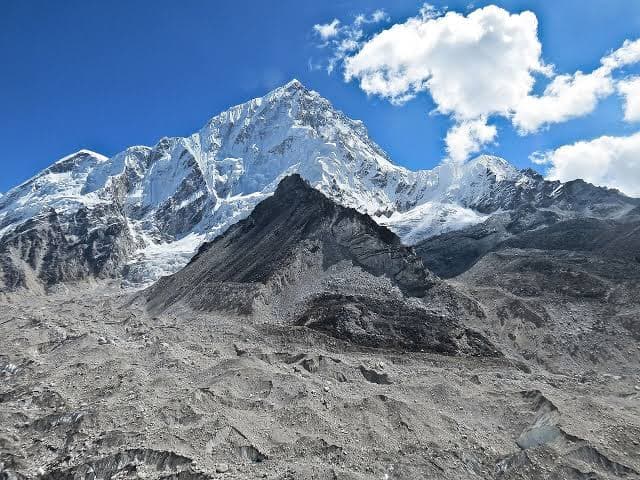
For thousands of trekkers every year, around the world, it's Everest Base Camp that has the greatest draw as a high-altitude destination. At 5,364 meters, there's roughly half as much oxygen in the air as at sea level.
While the Khumbu Valley offers spectacular views of Lhotse, Nuptse and the Khumbu Icefall to those who pay it respect, it's not always too keen on those in too much of a hurry. Altitude sickness, or Acute Mountain Sickness (AMS) as it is officially termed, is by far the largest cause of trekkers being forced to turn back or being airlifted out of EBC every season, and what makes it so dangerous is that it really doesn't care whether you're an Olympic-level athlete, a hardened hiker, or embarking on your very first high-altitude challenge: fitness may help your endurance, but it won't help you fend off the low oxygen levels.

Altitude sickness is almost entirely preventable, however, with preparation, pacing, medication knowledge, and the recognition of warning symptoms, the overwhelming majority of EBC trekkers will return home with stories of an unforgettable journey, and here is everything you need to know before you head off and while you're trekking.
Key Highlights
-
Ascend Slowly — Pace is Everything
-
Stay Hydrated — More Than You Think
-
Know the Symptoms — AMS, HAPE, and HACE
-
Use Medication Wisely — Acetazolamide (Diamox)
-
Prioritise Sleep and Nutrition at Altitude
-
Know When to Descend — The Non-Negotiable Rule
Ascend Slowly — Pace is Everything
When it comes to avoiding altitude sickness, the number one thing you can do actually doesn't cost a dime. And that thing is time. Once you're above 3,000 meters, you absolutely must not ascend more than 300-500 meters (980-1640 feet) in your sleep each night. Better yet, plan for a full rest day every third night.
A sensible trek up to Everest Base Camp (EBC) should take 12 to 14 days (round trip from Lukla). If you're looking at a 8- to 9-day itinerary, it's probably a case of false economy. The short time you save just isn't worth the risk. The two essential acclimatization stops along the trail are Namche Bazaar (3,440m) and Dingboche (4,410m). Both should include a minimum of one full rest day.
Here's a good strategy to employ: "climb high, sleep low." From Namche Bazaar, hike up to the Everest View Hotel (3,880m) for views and descend to sleep in Namche. After you've arrived in Dingboche, hike to Nangkartshang Peak (5,083m) and descend back to Dingboche to sleep. This effectively boosts your red blood cell production, but you do so safely without needing to spend the night at such a high altitude. Remember the Sherpa motto, "bistari bistari" - slowly, slowly? It's not just local colour; it's a matter of life and death.
Stay Hydrated — More Than You Think
You'll also lose water much faster up there than at sea level – this is because you'll be breathing more rapidly due to the altitude and the air is much drier. Not to mention you'll be exercising. Dehydration can make AMS symptoms much worse, making you feel even more tired and headachey, and it can also make you feel like you've got AMS even if you don't.
Try to drink around 3–4 litres of water a day. Don't just drink when you feel thirsty, as thirst means you're already dehydrated! The rule of thumb? Your urine should be pale yellow. If it's darker than that, drink more. You also want to avoid alcohol for at least 24–48 hours when you reach any new altitude.
Alcohol actually reduces your breathing reflex during sleep, which is not ideal for the period when your body is most actively acclimatising. You should be fine with moderate amounts of caffeine but anything more than two or three cups might make you need to pee more and therefore dehydrate you.
Know the Symptoms — AMS, HAPE, and HACE
Understanding the three tiers of altitude illness is not optional knowledge — it is trail-critical.
Acute Mountain Sickness (AMS) (Develops within 6–12 hours of reaching new altitude)
- Headache — the hallmark symptom
- Nausea or vomiting
- Fatigue and weakness
- Dizziness or lightheadedness
- Loss of appetite
- Difficulty sleeping
- Shortness of breath at rest
High Altitude Pulmonary Edema (HAPE) (Fluid in the lungs — leading cause of altitude death)
- Breathlessness even while resting
- Persistent dry cough, sometimes with pink/frothy sputum
- Crackling or gurgling sounds when breathing
- Extreme fatigue
- Bluish lips or fingernails (cyanosis)
High Altitude Cerebral Edema (HACE) (Fluid in the brain — medical emergency)
- Severe headache unresponsive to ibuprofen
- Loss of coordination / can't walk heel-to-toe in a straight line
- Confusion or disorientation
- Drowsiness progressing to unconsciousness
Use Medication Wisely — Acetazolamide (Diamox)
Going to high altitudes? You'll want to talk about medication
The gold standard in preventing Acute Mountain Sickness (AMS) is acetazolamide (brand name Diamox). This medicine works by increasing your breathing rate, allowing your body to clear out excess CO2 and take in more oxygen. This doesn't replace acclimatization; rather, it enhances the process.
The typical dosage for prevention is 125mg twice a day, starting one to two days before you go higher than 2,500m and for two days after you've reached your summit. For treatment of AMS once symptoms have appeared, doctors typically prescribe 250mg twice a day.
Side effects usually include tingles in the hands, feet, and around the mouth, and increased frequency of urination and a metallic taste to bubbly drinks (both of which are harmless!). Since acetazolamide is a diuretic, remember to stay well-hydrated. It is a sulfa drug, so if you have a sulfonamide allergy, please don't take it. You'll want to speak to your doctor well before your trek.
Other meds to know: Dexamethasone is a powerful corticosteroid and is used to treat life-threatening conditions such as severe AMS, HAPE and HACE in an emergency setting (you'll want to carry this as a "rescue" drug rather than as a prophylactic measure). Nifedipine is used to prevent and treat HAPE for those who are at particularly high risk. Neither drug should be used to self-treat.
Prioritise Sleep and Nutrition at Altitude
High altitude really screws up your sleep. You'll almost certainly find yourself experiencing Cheyne-Stokes breathing: an unnerving, cyclical breathing pattern in which your breath gradually gets shallower, eventually stops completely for a moment or two, then starts again with a gasp. It's alarming but usually harmless (Acetazolamide is an effective treatment). Listen to your body; there's no shame in calling it a night at 8 pm. Sleeping is preparation, not surrender.
Everybody's appetite vanishes at altitude, but you must keep feeding yourself. You need calories. You need carbs especially; they are easier for your body to metabolize in low-oxygen conditions than fats or proteins. Dal bhat - rice, lentils and vegetables - is the archetypal Nepali trek food. It's packed with carbs, it's always freshly made and you'll find it on the menu at every single teahouse along the trek. If your appetite has shrivelled, make do with smaller, more frequent snacks instead of big meals.
Know When to Descend — The Non-Negotiable Rule
For mild AMS, the recommendation is to stop ascending, rest for a day, treat the headache with either Advil or Tylenol and stay hydrated. If you feel better you can continue ascending, but be sure to be extra careful. If you're not feeling better or your symptoms are worsening, descend 1000-1500 feet.
If you have a moderate form of AMS (a lot of vomiting, severe headaches, feeling very weak) you absolutely cannot ascend. Rest and take 250 mg acetazolamide. If you do not see any improvement in 12-24 hours, descend 1000-1500 feet.
If you're showing any signs of HAPE or HACE, descend immediately. Don't wait for morning. Don't give it another hour. 1000 feet can sometimes be enough for remarkable recovery and it usually happens quickly. If you can get supplemental oxygen, take it as you descend. You could also use a Gamow Bag (a portable hyperbaric chamber that some rescue crews and hotels have) if immediate descent is not an option.
Other Important Things
-
Use a Pulse Oximeter: A pulse oximeter is a small, inexpensive device that clips to your fingertip and measures blood oxygen saturation (SpO₂) and heart rate. Bring one. At Namche, healthy, well-acclimatised trekkers typically read between 90–95%. A resting reading below 80% is a red flag; below 70% is a medical emergency. Use it as one data point alongside how you actually feel — do not make decisions based on the number alone.
-
Trek with a Licensed Guide: A licensed, experienced guide from a reputable Nepali trekking agency is not a luxury on the EBC route — it is a safety mechanism. A good guide recognises early symptoms, calls rest days when your ego won't, and knows the evacuation protocol. For first-time Khumbu trekkers especially, do not go without one.
-
Visit the Himalayan Rescue Association Clinic at Pheriche: The HRA operates a medical clinic at Pheriche (4,240 m), staffed by trained physicians during the trekking seasons. They offer a free daily altitude sickness lecture and individual consultations. This is one of the most valuable stops on the entire trek and takes less than an hour. Do not skip it.
-
Travel Insurance Must Cover Helicopter Evacuation: Helicopter evacuation is the primary rescue mechanism throughout the Khumbu and has saved countless lives. Before you depart, verify that your travel insurance explicitly covers high-altitude trekking and helicopter evacuation at EBC altitudes. Some policies cap coverage below 5,000 m — read the fine print carefully. Evacuation flights are expensive without insurance; with the right coverage, they are seamless.
-
Avoid These Common Mistakes: Rushing from Lukla to Namche in a single hard push; taking a "rest day" that involves a strenuous 6-hour hike; ignoring mild symptoms because you feel "mostly fine"; descending alone in the dark; and succumbing to group pressure to keep pace with stronger trekkers — these are the patterns that lead to evacuations. Be honest with your guide, your group, and yourself about how you feel.
You might have heard that the Everest Base Camp trek is one of the most extraordinary treks in the world. And you'd be right. You'll hike through quaint Sherpa villages, through rhododendron forests, past monasteries strung with colorful prayer flags, and enter a world of glaciers and majestic peaks that photos can never do justice. And here's the thing: the EBC trek is actually within reach of almost anyone who is reasonably fit and has a healthy respect for the mountain.
That respect starts with an understanding of altitude. AMS, HAPE, and HACE are not just acronyms, they're real, they're serious, and they are very much preventable. Go up slowly. Drink a lot of water. Learn the symptoms. Take the right medication. Take breaks when you need them. And when the mountain tells you it's time to head back down, listen - don't argue, don't delay.
Because the "summit" that matters in the EBC trek isn't how high you can go. It's how well you come back down. Altitude sickness isn't bad luck; in the vast majority of cases, it's the result of impatience. Go slow, and the Khumbu will give you everything it has.
.4828dc85.png&w=256&q=75&dpl=dpl_4wpSjHUy1BcszSUAUcwRxno9aXXy "Affiliation 1")
.a14f8e77.png&w=256&q=75&dpl=dpl_4wpSjHUy1BcszSUAUcwRxno9aXXy "Affiliation 2")
.7a169c70.png&w=256&q=75&dpl=dpl_4wpSjHUy1BcszSUAUcwRxno9aXXy "Affiliation 3")
.360ce5ac.png&w=96&q=75&dpl=dpl_4wpSjHUy1BcszSUAUcwRxno9aXXy "Affiliation 4")
.b0c53703.png&w=384&q=75&dpl=dpl_4wpSjHUy1BcszSUAUcwRxno9aXXy "Affiliation 5")
.f0df82a6.png&w=420&q=75&dpl=dpl_4wpSjHUy1BcszSUAUcwRxno9aXXy "Affiliation 6")
.06f9557e.png&w=384&q=75&dpl=dpl_4wpSjHUy1BcszSUAUcwRxno9aXXy "Affiliation 7")