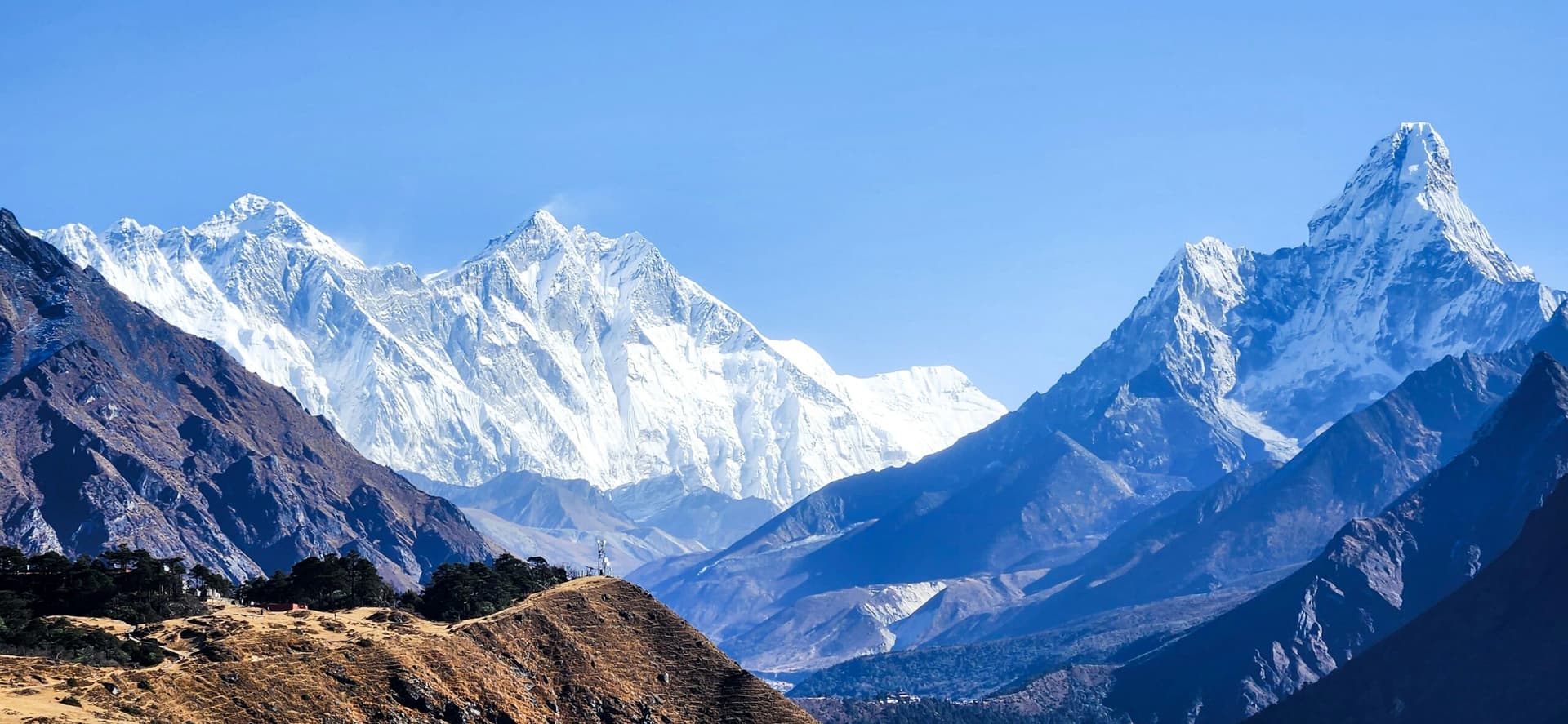
The Everest Base Camp (EBC) Trek, one of the world’s most celebrated treks, involves an out and back hike of 130+ kilometers (about 80 miles) across Nepal's Khumbu region to the foot of Mount Everest, the tallest peak on Earth (5,364m/17,598ft). Every year, trekkers from all over the world embark on this journey, leaving the airstrip of Lukla with dreams of setting foot where countless mountaineers have once tread, on their way to the summit.

However, this one thing that many trekkers forget the first time over forget is that WHEN to trek is arguably as important as how to prepare for the trek. The Himalayas are not always hospitable with good weather all year-round; monsoon will bring torrential rain, transforming trails into mud slides; winter will freeze water in your bottle even when it is inside your tent; traveling in the wrong season means the possibility of cloudy days blocking views of the mountains, or even life threatening cold and trail conditions, and therefore, sheer suffering on the trek.
Let's look at every month of the year, the temperature and trail conditions as well as crowd density, price of the trek and whether to trek then to make trekking EBC trek with your full confidence! This Everest Base Camp trek guide would surely be handy if you are a first-timer trekker who has never done any high altitude trek or even a seasoned mountain climber who is planning their last, or first Everest trek!
Key Highlights
-
Best Overall Seasons: Pre-monsoon (March–May) and Post-monsoon (September–November)
-
Peak Trekking Months: October, November, April, and May
-
Coldest Month on Trail: January (Gorak Shep can drop to -20°C / -4°F at night)
-
Warmest Trekking Month: June (but monsoon begins — not recommended)
-
Least Crowded Trekking Months: January, February, and July–August
-
Most Crowded Month: October
-
Average Trek Duration: 12–16 days
-
Altitude Range: 2,860m (Lukla) to 5,364m (EBC)
-
Annual Snowfall Window: December through February (heavy above 4,000m)
-
Monsoon Season: Mid-June to mid-September
Best Overall Seasons: Pre-Monsoon (March–May) and Post-Monsoon (September–November)
The two best seasons to trek to EBC are both undisputed, and it is not difficult to see why:
The Pre-Monsoon (Spring): March-May
Spring, without doubt, is an amazing time to be in the Khumbu. After the long winter, the season is warming up and the whole region is changing from the ground up. The rhododendrons below Namche Bazaar are stunning, bursting with reds, pinks and white at this time. Temperatures in the lower valleys (Lukla, Phakding, Namche Bazaar) are pleasantly warm and sunny (10-18 degrees Celsius/50-64 F) making it a pleasant trek up to Namche Bazaar.
In the higher reaches (Dingboche, Lobuche etc at over 4000 meters) average daytime temperatures are around 5-10 degrees Celsius (41-50 F) but can dip down to -5-10 degrees Celsius (23-14 F) at night in April. At Base Camp (5364 m), daytime temperatures are close to freezing (0-5 C/32-41 F) but the nights drop to an extreme -10-15 C (14-5 F) at this altitude. Visibility in the spring is extremely good in the mornings though can turn cloud over in the afternoons. Humidity increases throughout May as the monsoon season gets closer from the south and you may not want to start at this time of the month if you're attempting the entire trek. May is also the start of Everest expedition season so a fully functional Base Camp, with hundreds of tents and expedition staff is a fantastic sight for all spring trekkers.
The Post-Monsoon (Autumn): September-November
Autumn is widely considered to be the most stunning time of year to trek to Everest Base Camp. The skies clear after the monsoon rains and are often a deep, crystal blue. Visibility on a clear day from Kala Patthar (5545 m) can sometimes take your breath away as the major peaks appear with amazing clarity including Everest, Lhotse, Nuptse and Ama Dablam to name just a few. October is peak trekking month, the best for trekking to EBC; temperatures around Base Camp are between -5-0 degrees Celsius (23-32 F) and at Namche Bazaar are at 10-15 degrees Celsius (50-59 F).Trails are generally dry, and all of the tea houses are well stocked and fully staffed. This is also the time of year when the most important festivals, Dashain and Tihar, are taking place.
Trekking in November is still excellent although winter is starting to arrive; temperatures at Gorak Shep can reach -15 C (5 F) by late November and there may be early snow at higher altitudes. The number of trekkers is less at this time of year which some trekkers prefer.
Monthly Temperature Guide
Here is a complete month-by-month breakdown of conditions at key checkpoints:
Namche Bazaar (3,440m)
|
Month |
Day Temp |
Night Temp |
Conditions |
|---|---|---|---|
|
January |
2°C (36°F) |
-10°C (14°F) |
Cold, dry, clear skies |
|
February |
4°C (39°F) |
-8°C (18°F) |
Cold, some snowfall possible |
|
March |
8°C (46°F) |
-4°C (25°F) |
Improving, rhododendrons bloom |
|
April |
12°C (54°F) |
0°C (32°F) |
Warm days, cool nights — ideal |
|
May |
14°C (57°F) |
4°C (39°F) |
Warm, some clouds afternoon |
|
June |
16°C (61°F) |
8°C (46°F) |
Monsoon begins, misty trails |
|
July |
15°C (59°F) |
9°C (48°F) |
Heavy rain, leeches, poor views |
|
August |
14°C (57°F) |
8°C (46°F) |
Heaviest monsoon, avoid |
|
September |
13°C (55°F) |
6°C (43°F) |
Monsoon easing, views clearing |
|
October |
10°C (50°F) |
1°C (34°F) |
Perfect conditions, peak season |
|
November |
6°C (43°F) |
-4°C (25°F) |
Excellent visibility, colder |
|
December |
2°C (36°F) |
-8°C (18°F) |
Cold and dry, few trekkers |
Everest Base Camp (5,364m)
|
Month |
Day Temp |
Night Temp |
Conditions |
|---|---|---|---|
|
January |
-10°C (14°F) |
-25°C (-13°F) |
Extreme cold, very few trekkers |
|
February |
-8°C (18°F) |
-22°C (-8°F) |
Harsh, not recommended |
|
March |
-5°C (23°F) |
-15°C (5°F) |
Season beginning, manageable |
|
April |
0°C (32°F) |
-10°C (14°F) |
Good — spring prime season |
|
May |
2°C (36°F) |
-8°C (18°F) |
Warm as it gets, expedition buzz |
|
June |
5°C (41°F) |
-5°C (23°F) |
Monsoon risk, not recommended |
|
July |
5°C (41°F) |
-4°C (25°F) |
Monsoon — avoid |
|
August |
4°C (39°F) |
-5°C (23°F) |
Monsoon — avoid |
|
September |
0°C (32°F) |
-10°C (14°F) |
Post-monsoon begins |
|
October |
-5°C (23°F) |
-15°C (5°F) |
Best autumn month, stunning |
|
November |
-8°C (18°F) |
-18°C (-0.4°F) |
Cold but clear and beautiful |
|
December |
-10°C (14°F) |
-22°C (-8°F) |
Early winter, extreme cold |
Peak Trekking Months: October, November, April, and May
October is undeniably the single best month to trek. Clarity post-monsoon, good temperatures at low levels, all teahouses open and the festival season in Nepal means it is as close to perfect as conditions will get. Unfortunately this also means the trekking season is at its peak; you'll find it difficult to get a teahouse in Namche and queues for the viewpoints (like Kala Patthar at sunrise) will be an everyday occurrence. Book ahead for late September and October.
November still has fantastic conditions, with a much lower volume of trekkers. Visibility is outstanding and temperatures remain good (although becoming cold) with appropriate clothing. You'll find you have the trails almost to yourself and feel much more immersed in the trekking experience. Pack adequate warm gear and prepare for sub zero nights when trekking in November even as far up as Namche.
April provides excellent conditions in spring with beautiful blossoms, pleasant temperatures and active trekking trails post winter. April is the second most popular month overall, and the rhododendron forests between Lukla and Namche will be at their most beautiful. The trek's lower sections will be ablaze with colour in April and the entire trail will be coming back to life.
May is the warmest month of the year, and there's a palpable buzz about the trail, the world's highest mountain is alive and expeditions are lining up for their summit bid. You'll share teahouses with some of the world's leading mountaineers and feel the vibrant atmosphere of the world's highest mountain at its busy summit push. The main drawback is the increased cloud cover and possibility of rain later in the month as the monsoon approaches.
Crowd Levels and Costs by Season
High Season (October, April, May): Crowds abound, teahouses are packed, permits are expensive, flights cost more and lodge prices jump $5-10. This is not the time for spontaneous journeys. Lukla flights and lodges in Namche need to be booked at least months in advance, especially for the high season when teahouse prices can cost from $15-$40 per night in the Khumbu.
Shoulder Season (March, November): It's moderately busy, there are a few good deals and the conditions are still great. Many veteran trekkers favor November for this excellent blend of quiet and quality trekking conditions.
Off-Season (December-February): Almost no trekkers. Teahouses are often closed above Dingboche. Pack for the extreme cold, -25 C (-13 F), and you should have a tolerance for bitter conditions. The reward for well-equipped and seasoned trekkers is phenomenal winter stillness and spectacular snow-covered vistas – but it's for experienced trekkers only.
Monsoon (June-August): Most trekkers should not even consider this season. There is heavy rain making trekking precarious. Below 3500 meters there will be legions of leeches. The mountain vistas will be invisible. On the flipside, there are virtually no other trekkers around, cheap prices and the scenery is spectacularly green.
Booking Timelines by Season
|
Season |
Book Flights/Permits |
Book Teahouses |
|---|---|---|
|
October (peak) |
3–4 months ahead |
4–6 weeks ahead |
|
April–May |
2–3 months ahead |
2–4 weeks ahead |
|
November |
4–6 weeks ahead |
1–2 weeks ahead |
|
March |
4–6 weeks ahead |
Flexible |
|
Dec–Feb (winter) |
2–4 weeks ahead |
Confirm availability (some close) |
|
Jun–Aug (monsoon) |
1–2 weeks ahead |
Not needed (very few trekkers) |
The trek to Everest Base Camp is truly life-altering-and the journey you have will be enormously impacted by the time of year you go. To get this guide to its purest advice:
Go in October for the absolute ideal Everest Base Camp trekking experience: deep blue skies, razor-sharp views, mild daytime temperatures (and very cold-but manageable-nights) and the electric atmosphere of the peak trekking season. Yes, it's crowded, but it's crowded for a reason.
Go in April for spring blooms, the lively atmosphere of expedition season at Base Camp, slightly fewer crowds than October, and equal conditions to those in the fall. Go in November or March if you're a seasoned trekking veteran who appreciates fewer trekkers on the trail, and don't mind bringing extra cold-weather gear. The shoulders of trekking season do pay off with incredible views for well-prepared trekkers.
Avoid June, July, or August unless you specifically want the monsoon window (great for photography, green landscapes and zero crowds), but are prepared for all of the negatives associated with this time of year. Avoid December and January for your first trek. Winter trek in the Khumbu can be breathtaking but unforgiving, and the margin of error when it comes to cold-weather clothing and acclimatization is very small.
The Khumbu is indifferent to your plans. It moves to its own rhythm, its own time, and its own clock. Respect the seasons, pack appropriately for your chosen departure date, give yourself plenty of time to acclimatize, and the mountain will generously provide a view unlike any photograph could ever capture.
.4828dc85.png&w=256&q=75&dpl=dpl_4wpSjHUy1BcszSUAUcwRxno9aXXy "Affiliation 1")
.a14f8e77.png&w=256&q=75&dpl=dpl_4wpSjHUy1BcszSUAUcwRxno9aXXy "Affiliation 2")
.7a169c70.png&w=256&q=75&dpl=dpl_4wpSjHUy1BcszSUAUcwRxno9aXXy "Affiliation 3")
.360ce5ac.png&w=96&q=75&dpl=dpl_4wpSjHUy1BcszSUAUcwRxno9aXXy "Affiliation 4")
.b0c53703.png&w=384&q=75&dpl=dpl_4wpSjHUy1BcszSUAUcwRxno9aXXy "Affiliation 5")
.f0df82a6.png&w=420&q=75&dpl=dpl_4wpSjHUy1BcszSUAUcwRxno9aXXy "Affiliation 6")
.06f9557e.png&w=384&q=75&dpl=dpl_4wpSjHUy1BcszSUAUcwRxno9aXXy "Affiliation 7")