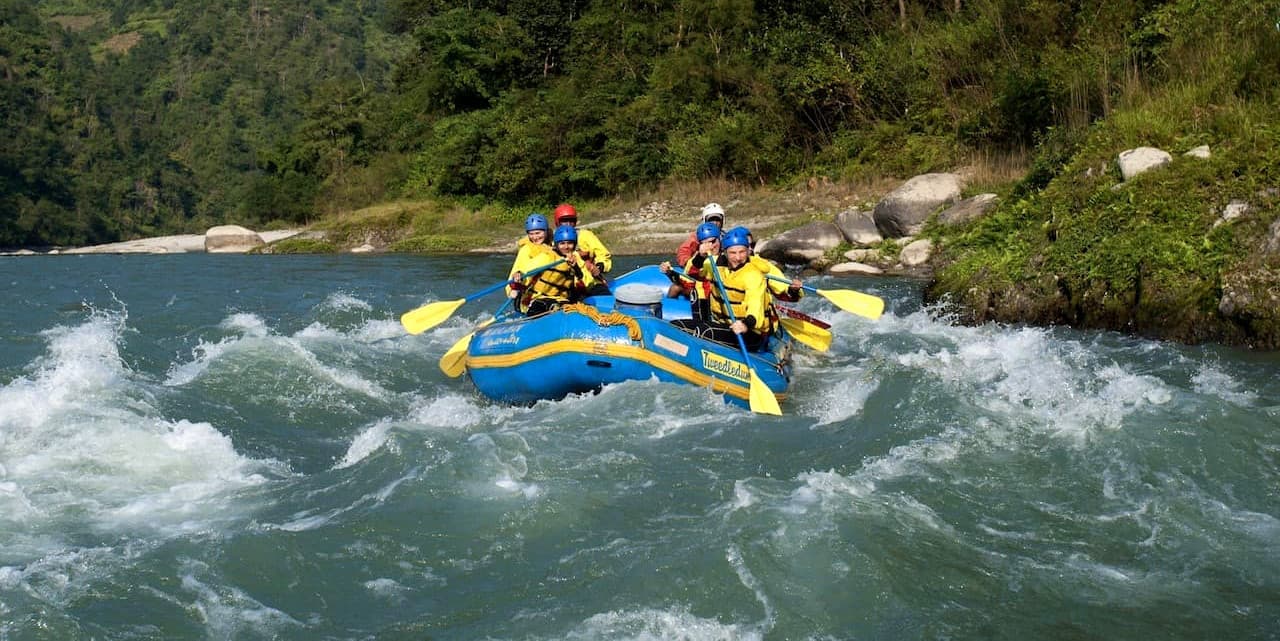
Welcome to Nepal, the ultimate destination for thrill-seekers and nature lovers alike, where adventure isn't just an activity—it's a way of life. Nestled in the heart of the Himalayas, this breathtaking country offers a spectacular variety of adventure activities in Nepal, from iconic high-altitude treks to heart-pounding extreme sports and immersive wildlife encounters. Imagine standing in the shadow of Mount Everest on the legendary Everest Base Camp trek, soaring over Pokhara's lakes while paragliding with Annapurna in view, or navigating the roaring rapids of the Trishuli River on a white water rafting expedition. Whether you're searching for the world’s most popular trek in Nepal, planning a family-friendly adventure, or seeking the adrenaline rush of bungee jumping into the Bhote Koshi gorge, Nepal delivers unmatched experiences for every type of adventurer. In this comprehensive guide, we explore everything from short treks near Pokhara and jungle safaris in Chitwan National Park to practical tips on the best time for trekking, trekking packages, and the cost of adventure activities. Get ready to discover why Nepal is consistently ranked as a top global adventure destination—your journey to the roof of the world starts here.

When you seek the pinnacle of Himalayan adventure, choose Nepal Adventure Holidays Pvt. Ltd., the undisputed leader in crafting extraordinary journeys across Nepal. We don't just offer trips; we deliver the definitive best adventure activities in Nepal, backed by decades of expertise, an unwavering commitment to safety, and a deep passion for our majestic homeland. From orchestrating your dream Everest Base Camp trek with seamless logistics and expert Sherpa guides to securing the most thrilling paragliding in Pokhara experience, we handle every detail. Our comprehensive Nepal trekking packages, including the classic Annapurna Circuit and exclusive Upper Mustang motorcycle tours, are designed for authenticity and immersion. We stand out by ensuring responsible travel, prioritizing client satisfaction, and offering 24/7 support, making us the preferred choice for both family-friendly adventures and solo female trekking in Nepal. Trust the pioneers. Choose Nepal Adventure Holidays Pvt. Ltd. for a journey that is not just an adventure, but a legacy.
Trekking
Trekking in Nepal is more than just a hike—it’s a transformative journey through some of Earth’s most breathtaking landscapes, vibrant cultures, and legendary trails. From the iconic Everest Base Camp trek to the serene hidden valleys of Langtang, Nepal offers unparalleled trekking adventures for all levels of adventurers.
Everest Base Camp (EBC) Trek
The Everest Base Camp (EBC) Trek is one of the world’s most iconic and life-changing adventures—a pilgrimage for trekkers and dreamers alike. This legendary trail leads you deep into the heart of the Khumbu region, offering jaw-dropping Himalayan vistas, rich Sherpa culture, and the unforgettable experience of standing in the shadow of Mount Everest (8,848m).

Quick Overview
- Duration: 12–16 days round-trip from Kathmandu
- Max Elevation: 5,364m (17,598 ft) at Everest Base Camp; 5,545m (18,192 ft) at Kala Patthar
- Difficulty: Moderate to Challenging (requires good fitness and acclimatization)
- Best Seasons: March–May (spring) and September–November (autumn)
- Starting Point: Lukla (reachable by a thrilling 35-minute flight from Kathmandu)
Why Trek to EBC?
- Stand at the foot of Mount Everest, Lhotse, Nuptse, and Ama Dablam
- Experience authentic Sherpa culture and visit ancient monasteries like Tengboche
- Trek through the Sagarmatha National Park (a UNESCO World Heritage Site)
- Challenge yourself while crossing high suspension bridges and rugged trails
- Witness sunrise from Kala Patthar—the best panoramic viewpoint of Everest
The Everest Base Camp Trek is more than a physical journey—it’s an emotional and spiritual adventure that tests your limits and rewards you with some of the planet’s most majestic scenery. With careful preparation, respect for the mountains and culture, and an open heart, the trail to EBC offers not just a check on your bucket list, but a story you’ll carry forever.
Annapurna Base Camp (ABC) Trek
The Annapurna Base Camp (ABC) Trek, also known as the Annapurna Sanctuary Trek, is a breathtaking journey into the heart of the majestic Annapurna massif. Unlike many high-altitude treks, this route offers an immersive, up-close experience where you are completely surrounded by a natural amphitheater of towering, snow-capped Himalayan peaks. It's a perfect blend of stunning scenery, rich cultural encounters, and manageable challenge, making it one of the most beloved treks in the world.

Quick Overview
- Duration: 7–12 days (typically 10 days from Pokhara)
- Max Elevation: 4,130 meters (13,550 ft) at Annapurna Base Camp
- Difficulty: Moderate (Good fitness required; less technically demanding than EBC)
- Best Seasons: March–May (spring rhododendrons) & September–November (clear autumn skies)
- Starting Point: Nayapul (a 1.5–2 hour drive from Pokhara
- Style: Teahouse trek (comfortable lodges with meals available)
Why Trek to ABC?
- 360-Degree Mountain Panorama: Be encircled by Annapurna I (8,091m), Annapurna South, Machhapuchhre (Fishtail), Hiunchuli, and Gangapurna.
- Incredible Diversity: Trek through terraced rice fields, lush rhododendron forests, traditional Gurung and Magar villages, and dramatic glacial valleys.
- Natural Hot Springs: Relax your muscles in the natural Jhinu Danda hot springs on the return journey.
- Cultural Richness: Visit traditional villages like Ghandruk and Chhomrong, experiencing warm local hospitality.
- Accessible & Shorter: A more time-efficient Himalayan experience than longer treks like EBC or the Annapurna Circuit.
The Annapurna Base Camp Trek is often described as the most visually rewarding trek for its effort. It delivers an intimate, awe-inspiring encounter with the Himalayas, wrapped in cultural warmth and natural beauty. Whether you're watching the first light hit Machhapuchhre from MBC or soaking in hot springs after a long day's hike, the ABC trek creates memories that resonate long after you've left the mountains.
Langtang Valley Trek
The Langtang Valley Trek is a hidden gem, often referred to as "the trek less traveled," offering a vibrant and accessible Himalayan experience just a short drive from Kathmandu. Following the devastating 2015 earthquakes, the resilient communities of Langtang have rebuilt, and the valley is more welcoming than ever. This trek combines stunning alpine scenery, deep Tamang and Tibetan culture, and a profound sense of tranquility, all without the crowds of the more famous trails.

Quick Overview
- Duration: 7–10 days round-trip from Kathmandu
- Max Elevation: 4,984m (16,352 ft) at Kyanjin Ri (optional summit); Tserko Ri (5,000m) for the ambitious.
- Difficulty: Moderate (well-graded trails but with steady altitude gain)
- Best Seasons: March–May (spring blooms) & September–November (clear skies)
- Starting Point: Syabrubesi (6–7 hour drive from Kathmandu)
- Style: Teahouse trek (cozy lodges with hearty meals)
Why Trek the Langtang Valley?
- Proximity to Kathmandu: The closest major trekking region to the capital.
- Dramatic Glacial Landscapes: Walk through the "Valley of Glaciers" beneath Langtang Lirung (7,227m), with moraines, icefalls, and high alpine meadows.
- Rich Cultural Immersion: Experience the unique Tamang culture, heavily influenced by Tibetan Buddhism. Visit ancient monasteries and stay in traditional villages.
- Wildlife Potential: Spot Himalayan wildlife like the red panda (rare), langur monkeys, and numerous bird species in Langtang National Park.
- Less Crowded & Authentic: Enjoy a more peaceful and personal trekking experience compared to Everest or Annapurna.
The Langtang Valley Trek is a profoundly rewarding journey that offers a perfect balance of natural grandeur and cultural depth. It’s a trek that feels personal and undiscovered, where you can connect deeply with both the landscape and its resilient people. Standing atop Kyanjin Ri, surrounded by a silent circle of icy peaks, is a moment of pure Himalayan magic that stays with you forever.
Adrenaline & Air Sports
Nepal isn't just about trekking—it's a premier global destination for adrenaline and air sports, offering unique ways to experience the Himalayas from breathtaking perspectives. From paragliding over pristine lakes to bungee jumping into deep river gorges and even skydiving beside the world’s highest peaks, Nepal delivers world-class thrills for every adventure seeker.
Paragliding in Pokhara
Paragliding in Pokhara is consistently ranked among the top paragliding experiences in the world, offering an unforgettable fusion of serene flight, breathtaking scenery, and pure adrenaline. Taking off from the scenic Sarangkot Hill, you’ll soar like a bird over the glittering Phewa Lake with the majestic Annapurna and Machhapuchhre (Fishtail) ranges forming a panoramic Himalayan backdrop. It’s not just a sport—it’s the quintessential Pokhara experience and a must-do for any adventure traveler in Nepal.

Quick Overview
- Location: Sarangkot Hill (take-off), landing at Pokhara Lakeside
- Flight Duration: Standard Flight: 20–40 minutes | Cross-Country Flight: 45–90+ minutes
- Type: Tandem flights (with a certified pilot) are the most popular; solo flights require certification.
- Best Seasons: October–December (post-monsoon clarity) & March–May (stable spring thermals)
- Experience Level: Perfect for first-timers and experts alike
- Thrill Factor: Moderate to High (soaring tranquility with thrilling thermal lifts and optional acrobatics)
Why Paragliding in Pokhara is World-Class
- Stunning Scenery: Unparalleled 360-degree views of the Annapurna Range, Machhapuchhre (6,993m), Phewa Lake, and the Pokhara Valley.
- Perfect Thermal Conditions: The unique geography between the lake and mountains creates reliable thermal uplifts, allowing for long, smooth flights.
- Professional & Safe Industry: Highly regulated with internationally certified pilots and modern equipment maintained to global safety standards.
- Accessible Adventure: No experience needed for a tandem flight. The take-off site is just a short drive from Pokhara's Lakeside.
- Variety of Options: From gentle scenic flights to adrenaline-pumping acrobatic flights (with "big ears," spirals, and wingovers).
Paragliding in Pokhara is more than just a tick on a bucket list—it’s a sensory masterpiece of flight that captures the very soul of Nepal’s natural beauty. It’s where the mountains meet the sky, and you become a part of that majestic landscape. Whether you’re seeking peace or pulse-raising excitement, this is an experience that will lift your spirits long after you’ve landed.
Bungee Jumping & Canyon Swing
Nepal is home to one of the world's most spectacular and thrilling bungee jumps, offering an adrenaline rush unlike any other against a backdrop of raw Himalayan beauty. Located at The Last Resort near the Tibet border, this is not just a jump—it's a full sensory experience combining a heart-stopping freefall with the roar of the Bhote Koshi River below. Paired with the equally intense Canyon Swing, it forms Nepal's premier destination for extreme gravity sports.

BUNGEE JUMPING: The Freefall
A 160-meter (525 ft) free-fall from a specially designed, steel suspension bridge hanging over the raging Bhote Koshi River. The bridge is anchored to both sides of the gorge, offering a stable yet flexible platform. The jump itself is a pure, unadulterated 4–5 seconds of freefall before the elastic cord rebounds, leaving you swinging peacefully above the river.
Why It's Unique:
- Stunning Natural Arena: The gorge is deep, narrow, and surrounded by lush green hills.
- Engineering Marvel: The bridge is designed specifically for bungee, with a unique "pendulum" jump trajectory.
- The Sound of Adrenaline: The roar of the river amplifies the thrill as you plunge toward it.
Jump Details:
Height: 160m (525 ft) from the bridge to the river surface.
Freefall: ~4–5 seconds.
Rebounds: Multiple, diminishing bounces.
Retrieval: Lowered onto a raft in the river and guided to shore.
CANYON SWING: The Giant Pendulum
If bungee is a vertical drop, the Canyon Swing is a horizontal launch. You are harnessed and step off the same bridge, but instead of bouncing vertically, you experience a 240-meter (787 ft) arc at speeds up to 150 km/h, swinging like a giant pendulum across the gorge. The initial 80-meter free-fall transitions into a massive, sweeping swing.
Why It's Unique:
- Longer Sensation: The swing lasts nearly 3 minutes, offering prolonged adrenaline.
- Multiple Launch Styles: Choose from various "launch styles" for added fun:
- The Standard Step-Off: Facing forward, you simply step off.
- The Backward Dump: Tipped backwards off the platform.
- The Chair Swing: Seated in a special chair for a different perspective.
- Panoramic Views: The swing provides a breathtaking, sweeping view of the entire gorge.
Swing Details:
- Vertical Drop: 80m (262 ft) initial freefall.
- Arc Length: 240m (787 ft) pendulum swing.
- Duration: ~2.5–3 minutes from launch to rest.
- Speed: Up to 150 km/h at the lowest point.
If you seek one of the most iconic and memorable adrenaline rushes in Asia, this is it. The combination of world-class engineering, an awe-inspiring natural setting, and the sheer primal thrill of the leap makes it a cornerstone of any adventure trip to Nepal.
Skydiving Over the Himalayas (Everest Skydive)
Skydiving over the Himalayas is not just an adventure—it’s the world’s most epic and exclusive skydiving experience, a once-in-a-lifetime feat where you freefall beside the planet’s highest peaks, including Mount Everest (8,848m). Operated by Everest Skydive, this is the highest commercial skydive on Earth, combining extreme altitude, unparalleled panoramic vistas, and a rush that redefines the meaning of adrenaline. It's more than a jump; it's a legendary aviation adventure.

The Everest Skydive: At a Glance
- Location: Syangboche Airstrip (3,750m) in the Everest region, with the drop zone near Amadablam Base Camp.
- Altitude: Jump from 23,000 ft (7,010 m) above sea level—far above standard skydives (typically 13,000 ft).
- Freefall: Approximately 45–60 seconds of pure adrenaline before parachute deployment.
- Experience: Tandem jump only (attached to a world-class professional instructor).
- Operator: Everest Skydive – the sole and pioneering operator, running since 2008.
- Season: Very limited window – usually October–November (post-monsoon, stable weather).
- Exclusivity: Extremely limited slots per season; often booked over a year in advance.
Why This is the Ultimate Skydive
- Highest Commercial Jump in the World: The altitude provides an extended freefall and views impossible anywhere else.
- Surreal Himalayan Backdrop: Freefall with a 360-degree panorama of Everest, Lhotse, Makalu, Cho Oyu, and Amadablam.
- Extreme Environment: Jumping in the thin, cold air of the high Himalayas adds a layer of unique challenge and thrill.
- Bucket-List Supremacy: Arguably the most prestigious and sought-after skydive on the planet, reserved for the truly adventurous.
The Everest Skydive transcends adventure sports—it’s a historic feat, a personal conquest, and an artistic experience painted on the grandest canvas on Earth. It is, without hyperbole, the most spectacular way a human can experience the Himalayas. For those with the means, fitness, and fearless spirit, it represents the absolute zenith of adrenaline travel.
Water Adventures
While famed for its mountains, Nepal’s powerful river systems and pristine lakes offer a thrilling and refreshing dimension to adventure travel. Water adventures in Nepal range from world-class white-water rafting on raging Himalayan rivers to serene kayaking, canyoning down waterfalls, and jungle canoeing in national parks. These activities provide a unique way to experience Nepal’s diverse landscapes—from deep gorges to subtropical lowlands—with a splash of adrenaline.
White-Water Rafting
White-water rafting in Nepal is a world-class adventure, offering some of the most exciting and scenic river runs on the planet. From adrenaline-pumping, steep drops on glacier-fed rivers to multi-day expeditions through remote canyons, Nepal's diverse river systems provide unparalleled experiences for both first-time rafters and seasoned experts. It’s not just about the rapids—it’s about camping on sandy beaches, soaking in hot springs, and experiencing Nepal’s stunning landscapes from a unique, river-level perspective.

A Typical 1–2 Day Trip (e.g., Trishuli)
- Morning: Pick-up from Kathmandu or Pokhara. Scenic drive to the put-in point.
- Midday: Arrive, meet your crew, safety briefing, gear up (helmet, life jacket, paddle).
- On the River: 2–4 hours of paddling through a mix of fun rapids and calm stretches. Stop for a riverside lunch.
- Afternoon: Continue rafting to the take-out point. Drive back or to your next destination (e.g., Chitwan or Pokhara). For 2-day trips, camp on a scenic beach with dinner under the stars.
A Multi-Day Expedition (e.g., Sun Koshi, Karnali)
- Logistics: Fully supported with gear rafts, expert guides, cooks, and camping equipment.
- Daily Rhythm: Paddle 4–6 hours, tackle major rapids, explore side hikes, visit villages.
- Camp Life: Sleep in tents on secluded beaches, enjoy campfire-cooked meals, and stargaze.
- Immersion: Deep connection with the river’s rhythm and the remote landscape.
Why Raft in Nepal?
- Variety: From a half-day sampler to a life-changing 10-day expedition.
- Scenery: Paddle through deep gorges, past waterfalls, terraced farms, and jungle—all with mountain backdrops.
- Cultural Bonus: Interact with riverside communities and experience a side of Nepal few tourists see.
- Accessibility: Trips can easily be slotted into a broader Nepal itinerary.
White-water rafting in Nepal is more than just an adrenaline sport—it’s a journey into the pulse of the country’s dramatic geography. The roar of the rapids, the teamwork of paddling, and the serenity of river camping create memories that last long after you’ve dried off.
Kayaking
Kayaking in Nepal offers an intimate, immersive, and empowering way to explore the country's legendary rivers and serene lakes. Unlike rafting, where you're part of a team, kayaking puts you in control—navigating rapids, surfing waves, and gliding through calm waters with a personal connection to the water. From learning the basics on Pokhara’s tranquil lakes to tackling challenging Himalayan descents, Nepal is a world-class destination for kayakers of all levels, renowned for its variety of water, stunning scenery, and vibrant paddling community.

Kayaking Experiences for Every Paddler
Beginner Kayaking & Courses
Perfect for first-timers wanting to learn in a safe, stunning environment.
- Top Locations: Phewa Lake (Pokhara) and the Lower Seti River.
- What to Expect: Multi-day introductory kayak courses covering wet exits, basic strokes, eddy turns, and river safety.
- Operators: Reputable schools like GRG's Adventure Kayaking and Kayak Nepal offer 3–5 day packages with professional instruction.
- Vibe: Supportive, fun, and focused on building confidence on flatwater and easy Class I-II rapids.
Intermediate River Running
For paddlers comfortable in moving water, ready to step up.
- Classic Rivers: Upper Trishuli (III), Middle Sun Koshi (III-IV), Marshyangdi (IV).
- Experience: Paddle technical rapids, learn to read water, practice ferry glides, and peel-outs. Often done as guided multi-day trips with safety kayakers.
- Highlights: The Marshyangdi River is famed as one of the world's best "pool-drop" rivers for kayaking, with clear blue water and continuous, fun rapids.
Advanced/Expedition Kayaking
For expert paddlers seeking remote, committing adventures.
- Expedition Rivers: Tamur River (IV-V), Upper Sun Koshi (IV-V), Bhote Koshi (V).
- The Adventure: Multi-day self-supported expeditions requiring strong technical skills, endurance, and expedition planning. Includes portaging around unrunnable sections and camping on remote beaches.
- Iconic Run: The Tamur River journey involves a 3-day trek to the put-in before a 6-day descent—a true Himalayan kayak pilgrimage.
Playboating & Freestyle
For those who love to surf waves and perform tricks.
- Play Spots: Certain features on the Trishuli and Sun Koshi rivers form standing waves and holes during optimal water levels (usually post-monsoon).
- Equipment: Creekboats and playboats available for rent in Kathmandu/Pokhara.
Sea Kayaking on Himalayan Lakes
A peaceful, scenic alternative focused on exploration and photography.
- Phewa Lake (Pokhara): Paddle to the Tal Barahi Temple, explore hidden coves with mountain reflections.
- Begnas & Rupa Lakes (Near Pokhara): Less crowded, pristine settings surrounded by hills.
- Gokyo Lakes (Everest Region): For the ultimate high-altitude paddle (requires trekking in and specialized logistics).
Kayaking in Nepal is the ultimate way to engage actively with the country's powerful and beautiful waterways. It offers freedom, challenge, and a profound sense of accomplishment as you navigate water flowing straight from the highest mountains on Earth. Whether you're rolling on a sun-dappled lake or lining up for a committing rapid in a remote canyon, the experience is uniquely personal and deeply rewarding.
Nepal offers more than a checklist. It offers a story. Pack your spirit for adventure, and prepare to find your own legend in the Himalayas.
FAQs for Best Adventure Activities in Nepal
Q: What is the best time to visit Nepal for adventure activities?
A: The best time is October to November (autumn) and March to May (spring). These months offer clear skies, stable weather, and ideal conditions for trekking, rafting, paragliding, and safaris.
Q: Do I need a guide for trekking in Nepal?
A: For most treks, a guide is not legally mandatory, but it is highly recommended for safety, navigation, cultural insight, and supporting the local economy. In restricted areas like Upper Mustang, a guide is required.
Q: What permits do I need for trekking?
A: You typically need a TIMS Card and a National Park/Conservation Area Permit. Restricted areas require an additional Restricted Area Permit, which must be arranged through a licensed agency.
Q: Which trek is better for beginners: Everest Base Camp or Annapurna Base Camp?
A: Annapurna Base Camp (ABC) is generally better for beginners. It’s shorter, reaches a lower altitude, and is less demanding than Everest Base Camp (EBC), while still offering stunning mountain scenery.
Q: Is paragliding in Pokhara safe for beginners?
A: Yes. Pokhara is one of the world’s safest paragliding sites. Tandem flights are conducted with certified pilots using modern equipment, and thorough safety briefings are provided.
Q: What is the most extreme adventure activity in Nepal?
A: The Everest Skydive is the most extreme. Other high-adrenaline options include bungee jumping at The Last Resort (160m), Grade V rafting on the Bhote Koshi River, and high-altitude peak climbing.
Q: Can I combine trekking with other activities in one trip?
A: Absolutely. A classic two-week itinerary can include trekking, paragliding in Pokhara, a jungle safari in Chitwan, and white-water rafting—all thanks to Nepal’s compact and diverse geography.
.4828dc85.png&w=256&q=75&dpl=dpl_4wpSjHUy1BcszSUAUcwRxno9aXXy "Affiliation 1")
.a14f8e77.png&w=256&q=75&dpl=dpl_4wpSjHUy1BcszSUAUcwRxno9aXXy "Affiliation 2")
.7a169c70.png&w=256&q=75&dpl=dpl_4wpSjHUy1BcszSUAUcwRxno9aXXy "Affiliation 3")
.360ce5ac.png&w=96&q=75&dpl=dpl_4wpSjHUy1BcszSUAUcwRxno9aXXy "Affiliation 4")
.b0c53703.png&w=384&q=75&dpl=dpl_4wpSjHUy1BcszSUAUcwRxno9aXXy "Affiliation 5")
.f0df82a6.png&w=420&q=75&dpl=dpl_4wpSjHUy1BcszSUAUcwRxno9aXXy "Affiliation 6")
.06f9557e.png&w=384&q=75&dpl=dpl_4wpSjHUy1BcszSUAUcwRxno9aXXy "Affiliation 7")